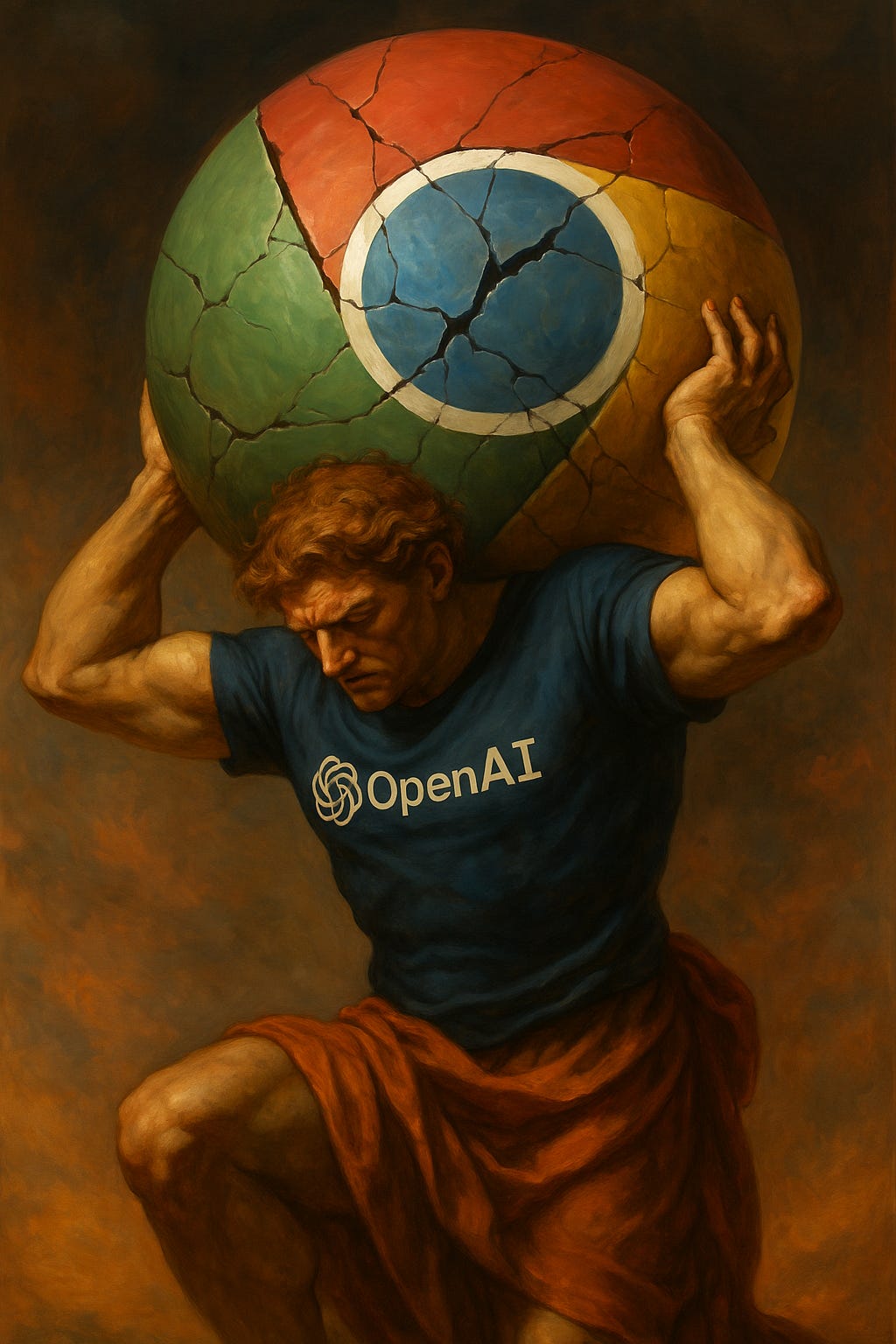
OpenAI is coming for Google’s crown, one tab at a time.
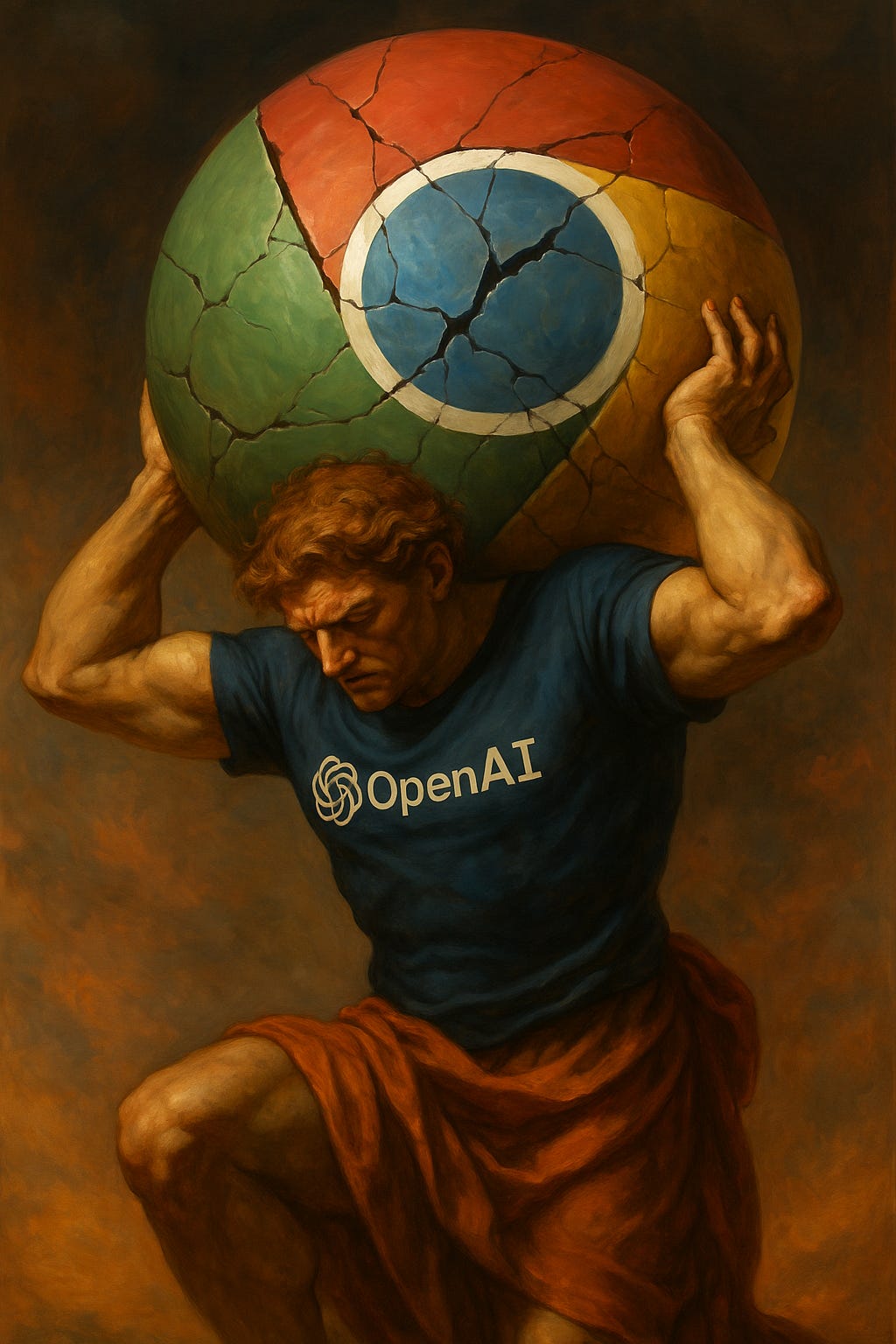
After months of rumors, OpenAI finally did the inevitable – making its play to own the browser, the most coveted chokepoint in a user’s digital life.
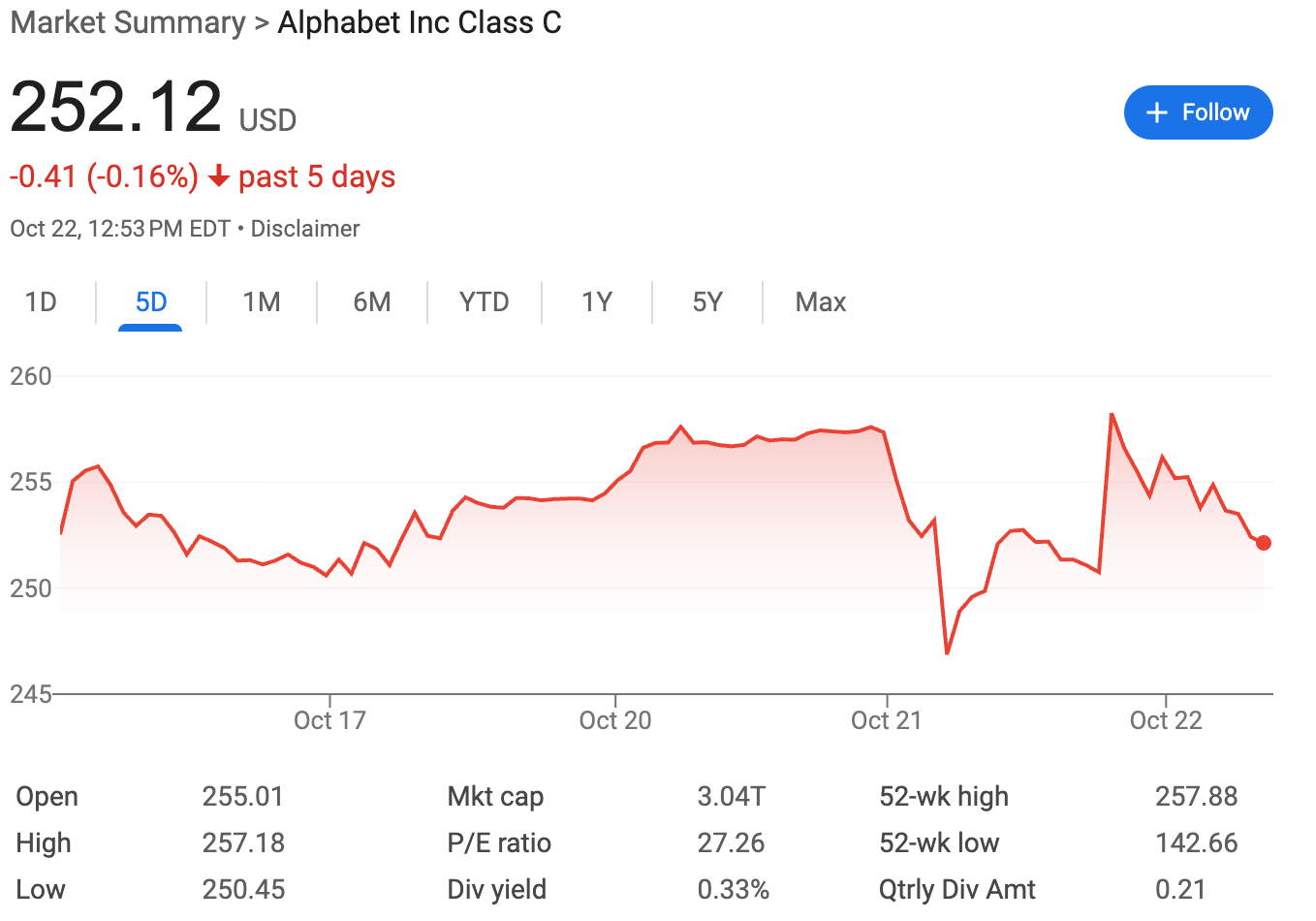
The markets reacted in their usual “measured” way – a quick dip, a few breathless headlines, and recovery by market close.
ChatGPT Atlas is a full web browser with a built-in ChatGPT sidebar that reads the current page, summarizes, compares, and rewrites. Agents can execute multi-step tasks like travel research or shopping, moving across sites with user permission.
The browser has always been the front door to the internet – and, for Google, the key to its kingdom. Chrome dominates global market share, quietly gathering behavioral data for ad targeting and channeling traffic into Search, the profit engine of Google’s empire. Just weeks ago, Google infused Gemini directly into Chrome, collapsing its assistant into the same layer.
Now, OpenAI wants a slice of that gateway and it’s an all-out race for the interface of intent.
There are roughly 3.5 billion Chrome users and a Chrome icon baked into every Android phone and corporate laptop on Earth. OpenAI, for all its cultural firepower, has to convince people to switch browsers -a decision most humans make about once a decade, under duress, and only after the old one stops loading their banking site.
This is the part where business reality collides with vibes. Atlas might be more elegant, more “agentic,” more whatever – but the distribution math is brutal. Google owns the defaults. OpenAI owns the headlines.
That’s the trillion dollar question: Can OpenAI – with 800M weekly active users and unmatched cultural mindshare – convince people to switch away from Chrome? Or will Chrome’s entrenched defaults keep OpenAI’s browser a sideshow?
The Narrative Flip
Two years ago, Google was seen as the company that wrote the transformers paper but failed to capitalize on it – the giant who blew their lead. That story’s been rewritten.
Today, Google’s models are as good or better, often cheaper, and they’ve clawed back technical leadership. Case in point: OpenAI’s Sora 2 launched to massive fanfare… and a week later, Veo 3.1 quietly took the top spot.
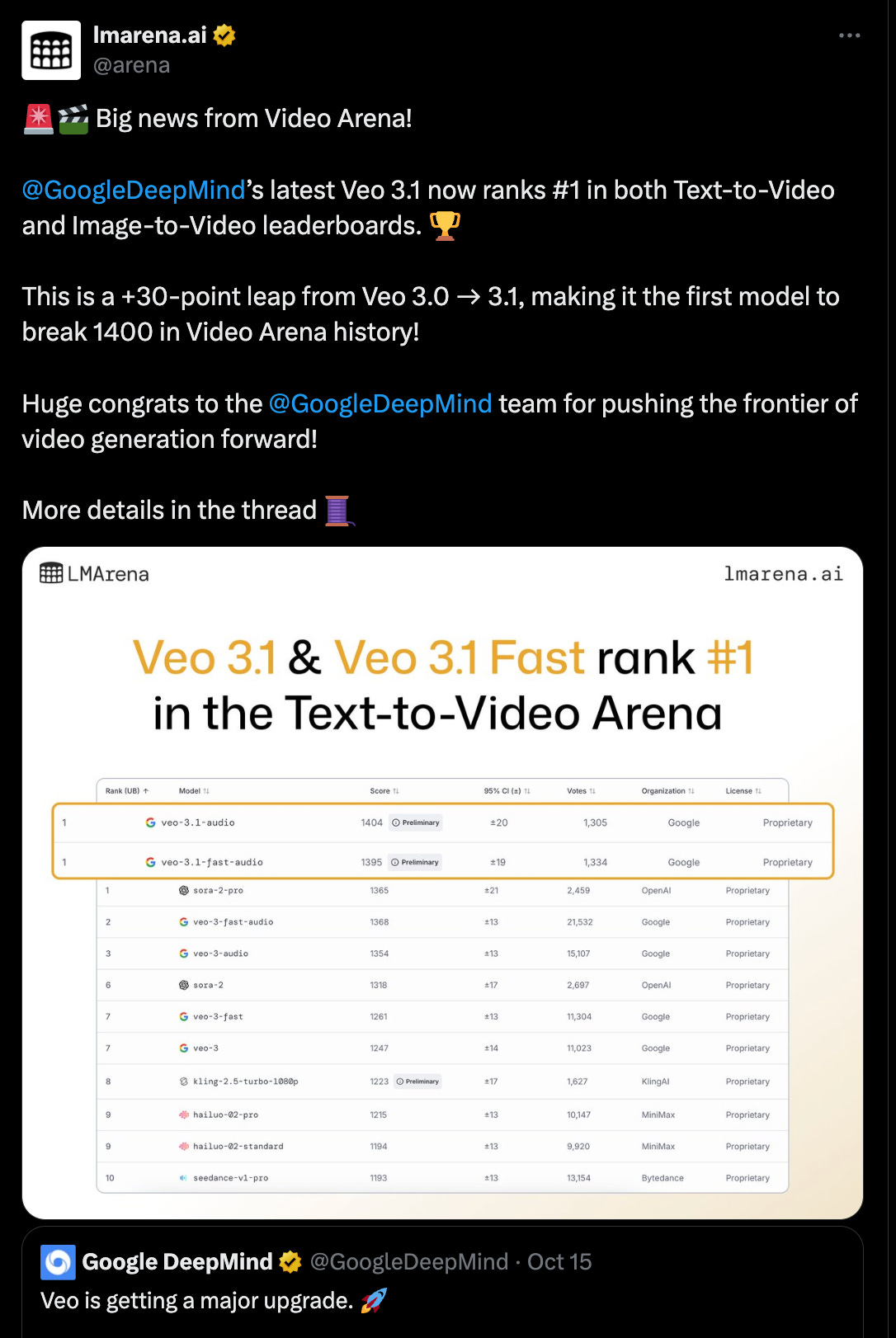
Still, narrative matters. And while Google may be back on top technically, OpenAI still owns the story. Nobody markets innovation with more velocity or drama. When OpenAI launches something, people look up.
This will be an interesting match-up to watch.
Honorable Mentions
Perplexity deserves credit – their taste, speed, and execution are elite. They were first to market with a UX that made citations and follow-on questions standard, then embedded checkout in chat, and most recently launched an AI-native browser, Comet.
Their Achilles’ heel? Distribution. They don’t have the funnel or platform lock-in of OpenAI or Google. Every brilliant feature they ship gets copied within weeks. It’s a constant paddle-to-stay-afloat game against giants who move slower but have reach baked in.
And then there’s Apple. Rumors swirl of a Safari overhaul, but if their pace with Siri is any indication, the race may be over before they enter the arena.
By the time they do, the power users – the ones who shape defaults – will have already moved on.
The Great Collapse
When Apple unveiled the iPhone in 2007, Steve Jobs stood on stage and said,
“An iPod. A phone. An Internet communicator. Are you getting it? These are not three separate devices.”
It was the collapse of categories – and the birth of a new computing layer.
Eighteen years later, it’s happening again. Only this time, it’s software collapsing.
We’re watching the convergence of three pillars of computing – the assistant, the operating system, and the browser – into something new: a digital presence.
Until now, each of these played a separate role: The assistant answered questions, the OS ran your apps, and the browser showed you the web.
Now, they’re converging: the assistant lives inside the browser, the browser runs like an OS, and the OS fades into the background. What remains is a persistent digital self – context-rich, portable, and adaptive.
When these three collapse, what emerges isn’t another app – it’s a digital twin that travels with you across tools, devices, and contexts, orchestrating your life. I think we’ll see two expressions of the same presence emerge:
-
A professional self, fluent in your work, tone, and workflows.
-
A personal self, tuned to your habits, media, and moments.
Together, they form a continuous cognitive loop between you and your machine.
The user interface dissolves. What’s left is the relationship – between you and the intelligence that knows you. A continuation of you in the digital world.
That’s why this is such a big deal.