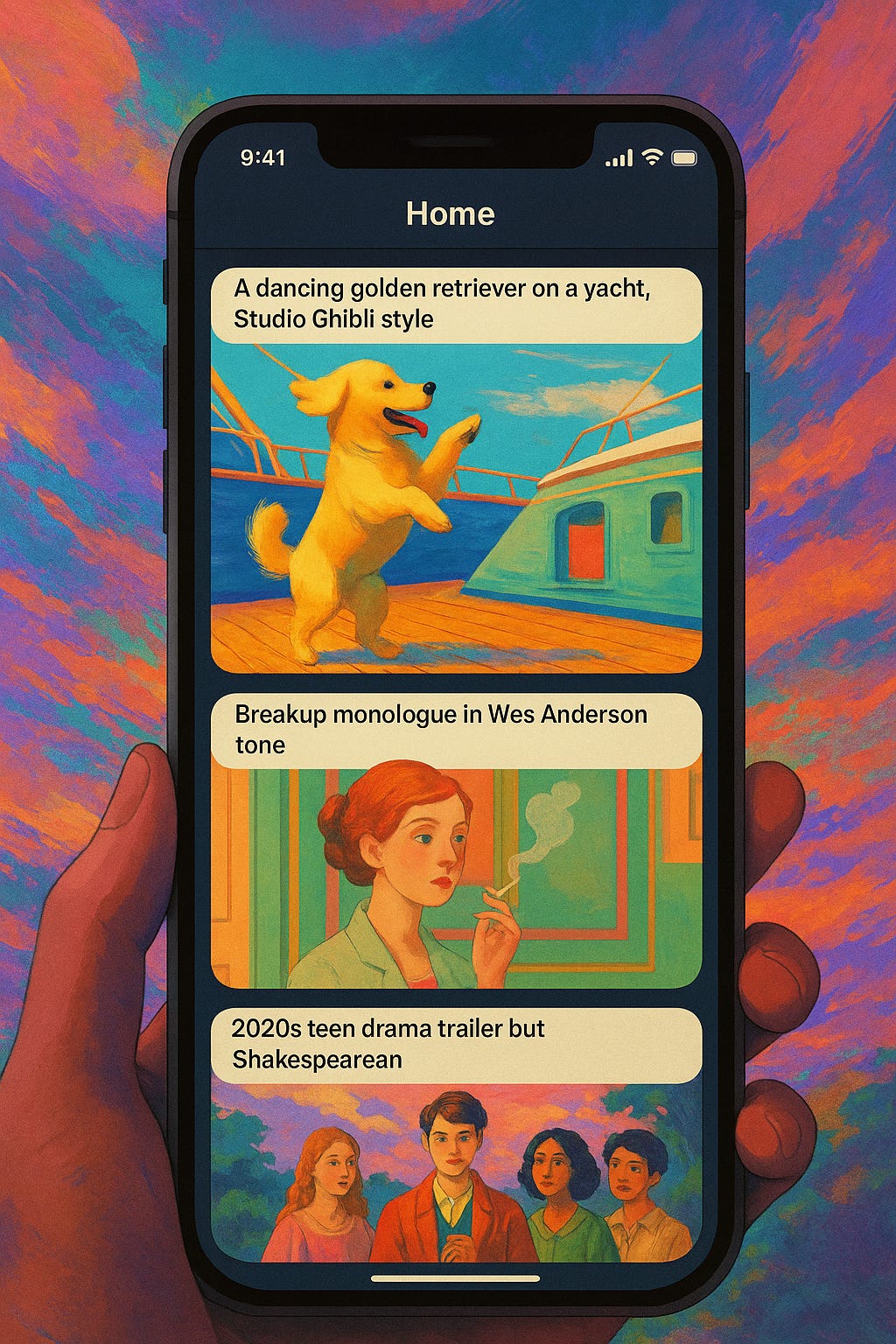
Meta and OpenAI race to own the first AI-native social feed
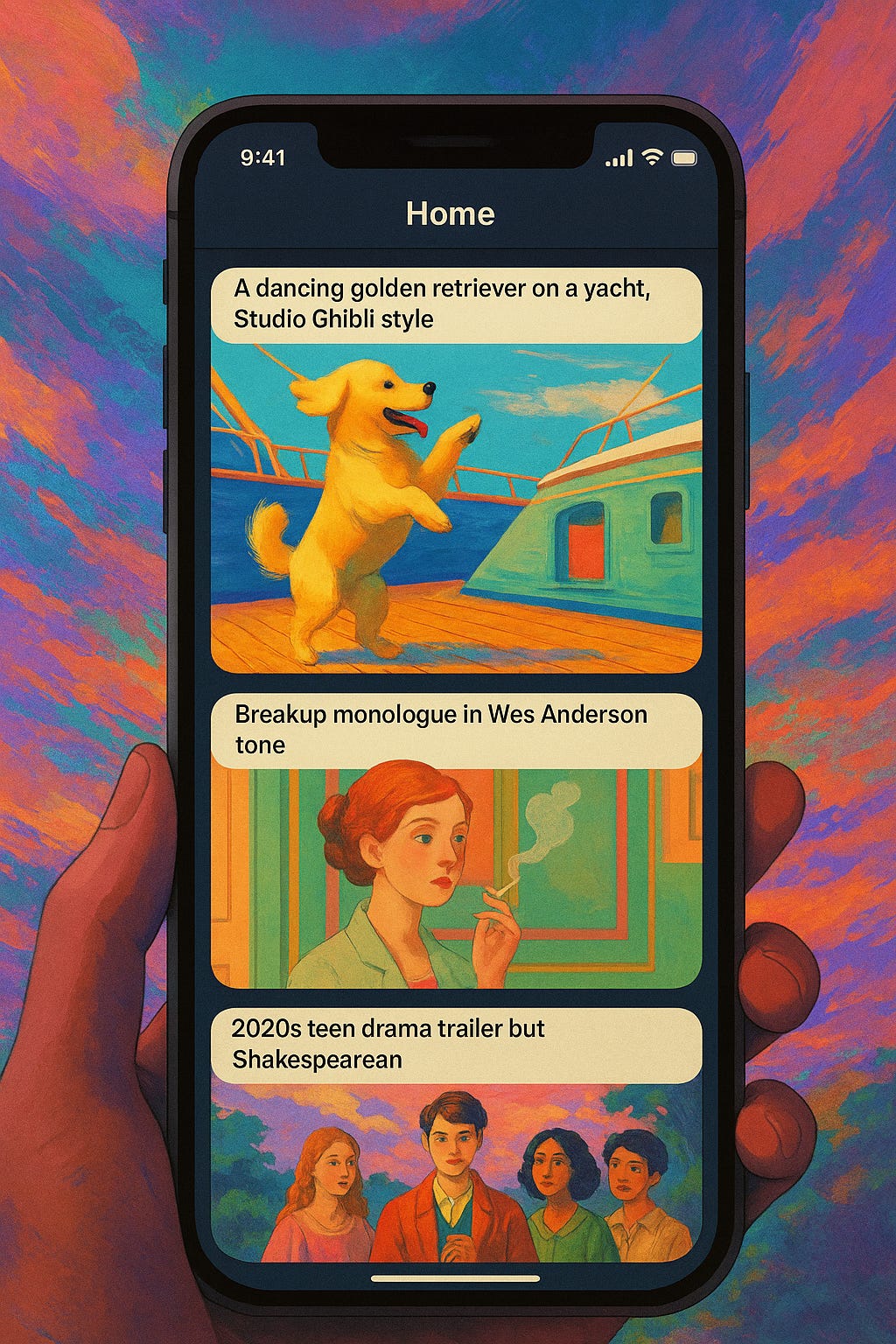
For years, the question was: What happens when AI joins our workflows? Turns out, that was just the warm-up. The real trip is: What happens when it joins our group chats?
With Meta’s Vibes and OpenAI’s rumored Sora video app, we’re witnessing the birth of a new product category – social platforms designed not just to share or enhance human expression, but to generate it.
AI videos have already been flooding our feeds – from bunnies on trampolines, to kangaroos at TSA. We’re drowning in AI slop, falling for fakes we used to mock our parents for, yet the next platform play is to double down on the synthetic. In a world starved for authenticity, Meta and OpenAI are opening the floodgates of algorithmic sludge. It feels backward. Until it doesn’t.
My musings on the subject:
1. Synthetic by Design
We’re moving from “Oops, that was AI?” to “Of course it was AI – and I still liked it.” The shift is subtle but massive. Until now, AI-generated content has been judged by its ability to pass as human. That’s over.
These new platforms don’t bother hiding the wizard behind the curtain. They stick him on stage with a mic.
“This was made with Sora.”
“Here’s a crazy prompt I tried.”
“Check out this edit – guess the model I used?”
AI becomes the medium, not the mask.
This doesn’t mean we reject human content. But we no longer require it for something to be meaningful or enjoyable. Think Pixar vs. live-action. You can enjoy both – on their own terms. These platforms are trying to do the same for AI – turning “synthetic” from slur to genre.
2. From Selfies to Simulations
The original social apps (Facebook, Instagram) were built to document you – your life, your photos, your moments. That’s no longer the center of gravity.
TikTok cracked the code by shifting from friends you know to content you like.
Now comes the next jump: from documenting your life → to generating your vibe. The prompt is the post. The output isn’t a selfie – it’s a simulation.
Social becomes less about showcasing who you are and more about curating what you can imagine.
3. Feed as Hallucination
No successful social platform has ever limited TAM by creation tool. Final Cut videos go on Reels. Snap filters show up on TikTok. Instagram doesn’t care how the photo got taken. So why would Meta or OpenAI build walled gardens for AI-native video? Because maybe the bet isn’t on content creation. It’s on content generation.
Right now, the feed is populated by user-prompted AI. Soon, it may be self-generating. Your likes, scrolls, late-night obsessions – all weaponized into a hallucination stream tuned to your dopamine receptors.
TikTok showed the power of recommendation. This is the next step: full content synthesis. The feed doesn’t just curate content; it conjures it. It stops being a window and starts being a mirror – one that doesn’t just reflect your taste, but magnifies, mutates, and monetizes it.
We’re not that far from:
-
“Generate 30-second surreal nature videos with lo-fi music that feel like early 2000s Tumblr nostalgia.”
-
“Mash up Wes Anderson and Studio Ghibli with a twist of Gen Z dating humor.”
Suddenly you’re not following creators – you’re following vibes. The influencer isn’t MrBeast, it’s GPTBeast. Discovery becomes dopamine optimization.
And just as you’re fully hooked, Meta slips you a headset. Welcome to the Experience Machine.
4. Authenticity Goes Premium
In a world of infinite AI content, human-made becomes a rarity and authenticity becomes a counterculture. Realness – flawed, messy, slow – will be a premium product.
This doesn’t mean people reject AI content. It means human content gets repositioned:
-
Verified Realness becomes the new blue check.
-
“Not AI” becomes a tag.
-
Messy, unfiltered content regains value.
The same way farm-to-table food emerged in a world of mass production, or indie music thrived in the age of Spotify algorithms – authenticity will rise again. But as the alternative, not the norm.
5. OpenAI has the Novelty Window. Meta has the Surface Area
OpenAI’s rumored app has a natural curiosity tailwind. It’s the shiny new toy from the company everyone’s watching. And if they execute the product well -intuitive remixing, community prompts, clever feeds – they’ll get early adopters fast.
But Meta is playing a long game. It doesn’t need novelty. It needs habit. And it owns all the places where habit lives – Instagram, Reels, Whatsapp. Even Threads has 400M MAUs, which is wild because I don’t know a single person who uses it on purpose. The trick? Every time you accidentally tap an Instagram embed, you’re a “monthly active.” And since deleting Threads requires deleting Instagram, most of us are prisoners of our own thumbs. Even Machiavelli would call it heavy-handed. Meta just calls it product strategy.
Back in 1974, philosopher Robert Nozick posed a thought experiment: would you plug into a pre-programmed “experience machine” where everything feels perfect but none of it is real?
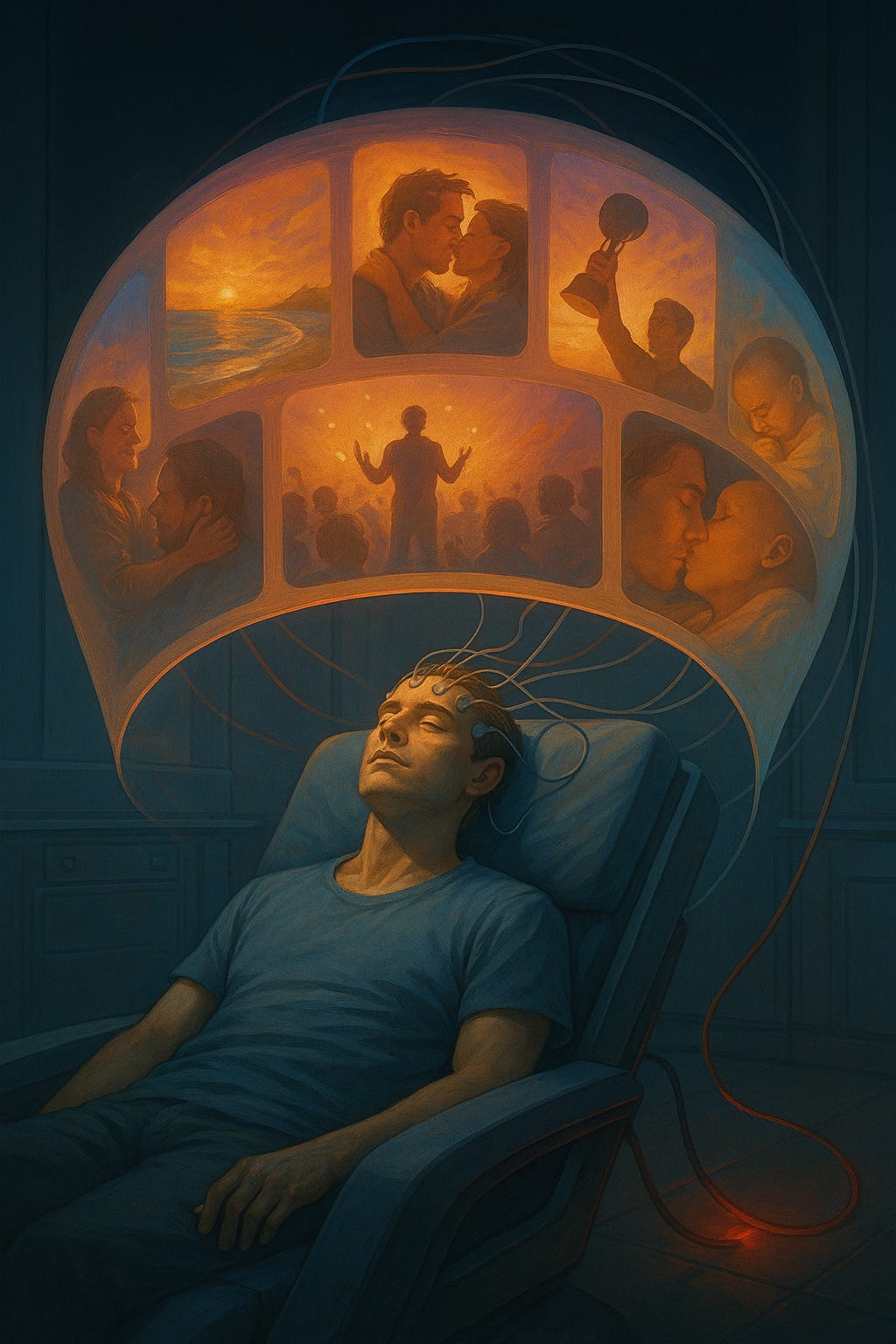
Nozick framed it as a warning. In 2025, it reads like a product roadmap.
We’re no longer asking if. We’re debating who gets to build it.