Brand turnarounds are a business setup, not a creative miracle
Welcome to the Sociology of Business. In my last analysis, Ecosystem, not empire, I explored how niches drive scalable growth and how to scale in fragmented markets. If you are on the Substack, join the chat. With one of the paid subscription options, join Paid Membership Chat, and with the free subscription, join The General Chat on The Sociology of Business WhatsApp group.
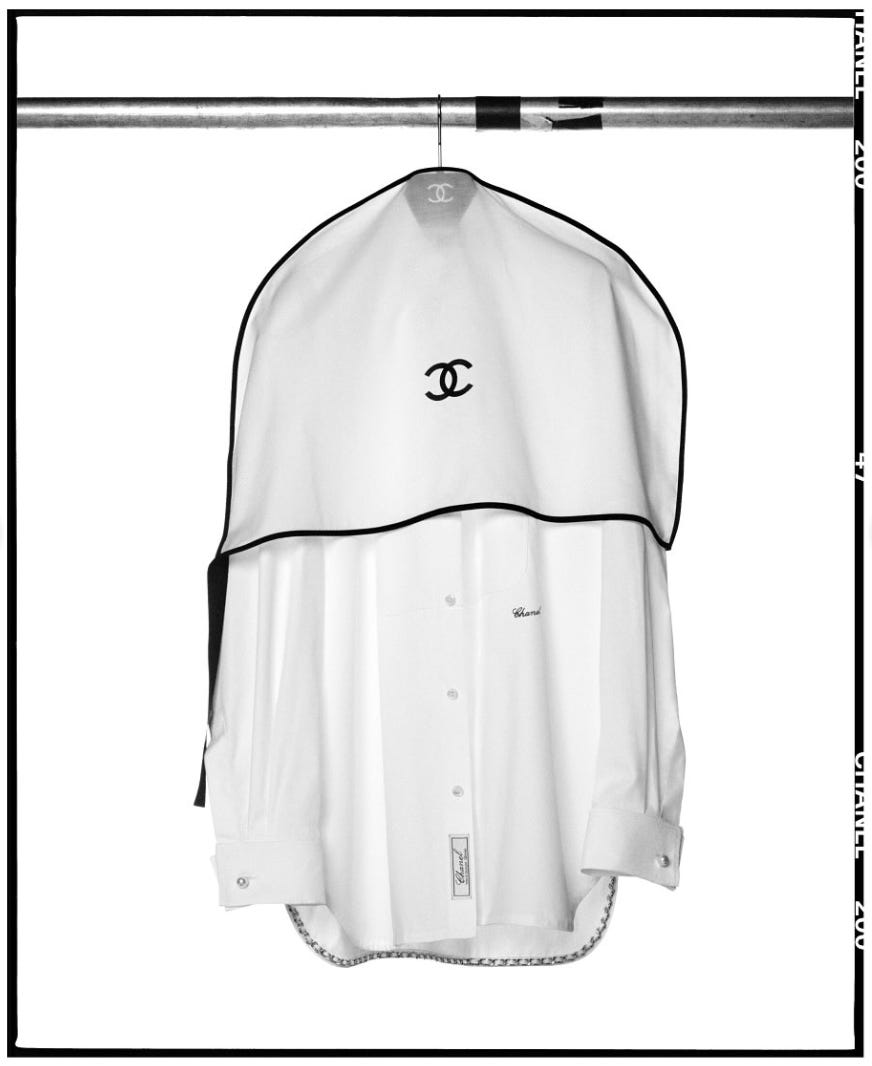
“For houses like Chanel, the ‘spark’ created by an artistic director is essential to shaping the brand image. But to generate several billion euros in revenue, you need extremely solid organizations that can fully harness that creative energy. Manufacturing, logistics, deliveries, and store management are subjects in their own right. The role of an artistic director has a beginning and an end — the idea of an all-powerful creative director is, in my view, not a good one for brands.” – Bruno Pavlovsky, Chanel’s President of Fashion
In April 2024, based on my work as the Chief Brand Officer, I wrote here that: “it is deceivingly simple to look at a newly appointed designer as a brand savior. Designers are part of a complex web of operational, logistical, commercial and strategic decisions.”
Celebrating a single person—a creative leader, an artistic director, a brand executive—is easy. It also obscures the fact that a successful brand turnarounds are a matter of a business setup.
To have the original creative output, brands have to set the business for it.
In this setup, financial accountability is shared among functions of design, merchandising, marketing, creative, and channel planning. All functions are part of the same production process. They amplify each other, and work toward shared financial results.
On December 3rd, I hosted a dinner for a group of the Sociology of Business paying subscribers at the Bridges. The gathering exceeded my expectations and everyone seemed to have had a great time. When the dinner wrapped up, nobody realized how late it was, which is always a sign of a successful event. New connections were made, conversations were fun, and the energy in the room was great. Thanks to Nicolas Mouchel, owner of Bridges, for his hospitality and fantastic food (and congratulations on the Michelin star). I wish I could have hosted everyone who applied but the room had the guest count restrictions. Next time!
Organizational creativity is not about being “creative” in a traditional sense (design, marketing, communications). It’s about linking operational rigor with flexibility. To be both flexible and disciplined, organizational processes connect functions—marketing, merchandising, business planning, retail, media—and synchronize their output to drive sales and brand equity.
Organizational creativity links companies’ cultural relevance with their commercial performance. It protects pricing power, ensures high margins, and maintains product desirability.
To make this happen, brands are evolving not just their output, but their strategy, process and infrastructure. The first step in this direction is to connect idea generalization with idea commercialization. It means that those who come up with ideas should know how to sell them. Put it simply: do not suggest a capsule, merch, or a collaboration that is not measurably connected to business results. It also means that those that are selling ideas should also be able to come up with new ideas. Or: channel planners feed new ideas to design, marketing, and creative.
Creative ambition is a matter of operational excellence.
Integration of business, product and brand strategy leads to organizational alignment, relentless execution, and a clear and unified vision. It requires discipline and coordination: a strong business model alone does not create desirability. Desirable products without operational efficiency do not scale. Cultural participation without strategic discipline does not get monetized.
In practice, it looks like this:
Business strategy is the engine that combines clear objective, agile assortment planning, demand forecasting, inventory management, data-driven pricing, and channel amplification to quickly respond to market demand.
Product strategy balances product accessibility with aspiration. It uses special editions, capsules, merch or collaborations to elevate the brand and create halo across core products. Agile merchandising, flexible inventory management, and near-shoring compress time-to-market, while pricing, quality, and design reinforce value perception and brand positioning.
Brand strategy is the cultural engine, ensuring every touchpoint—store, website, app, and social media—delivers a seamless and recognizable experience. It generates portfolios of ideas rather than relying on single campaigns, integrating marketing spend as a strategic investment, and aligning all functions toward both short-term commercial results and long-term brand equity.
For business, product and brand strategy to be in sync, functions operate as follows:
Marketing & Media: Manage a creative portfolio that places the brand across cultural contexts and allows it to capture many cultural moments. Create a recognizable universe through creative direction, styling, PR, visual merchandising and cultural engagement. Marketing spend is an investment and revenue-driver, not a cost center.
Merchandising: Synchronizes assortment release cadence with the brand narrative, to connect product and brand story. Ensures strategic newness, interest, and brand consideration through product calendar. Puts customer personas front and center through full look and wear scenarios, styling guides and lookbooks, and ensure that product assortment appeals to different target customers. Strategically integrate archives, hero products, capsules, and collaborations with the main collection.
Design: Maintains a signature aesthetic while curating seasonal direction, hero products, and special editions. A signature aesthetic is how a brand participates in culture, and is conveyed through product design, fashion direction, and styling. Enforces a consistent narrative through annual concepts and their seasonal rollout, archive revivals, vintage curation, special editions and capsules and collaborations. Defines product pyramid, signature products, brand look and brand codes (patters, color palette, monograms, prints, font, graphic elements).
Retail & Customer Experience: Uses data and brand handwriting to synchronize physical and digital touchpoints, ensuring cohesive UX and aspirational storytelling in stores, pop-ups, and online platforms. Website and stores are aligned through visual merchandising and user experience design, copy, art direction and CRM.
Customer Intelligence & Analytics: Ongoing feedback loops refine assortment, creative, and retail operations. Data is a creative and business enabler.
Business & Commercial Planning: Assigns KPIs to creative investments, explore innovative release models, and ties cultural initiatives to revenue generation.


The brand stack

How to sync all your brand applications to deliver on your brand vision, mission and promise
The new merchandising strategy

How to program your merchandising from product pyramid to product portfolio
Volume/value dilemma

This dilemma – meet the volume and sacrifice value or maintain value at the expense of the volume – is at the center of the most of brand positioning, competitive, and growth strategies.