Everyone knows Quibi blew $1.7B and failed spectacularly. What this blog presupposes is… maybe it didn’t?
What if Quibi, one of the most spectacular business failures of the century, was on to something?
I don’t mean on to something by spending 1.75 billion dollars in six months.
I don’t mean on to something by, with a straight face, calling a company Quibi because that’s “quick bites” shoved together.
I don’t mean on to something by making two billionaire boomers the face of a company promising to deliver the future of media, Hollywood, and the moving image itself.
I mean that when I look at video on the internet, I see a phrase in my mind’s eye. And that phrase is: It’s Quibi baby.
[Ryen Russillo voice] I’m actually more interested in what Quibi got right than what they got wrong.
-
Quibi was right about shows.
-
Quibi was right about short-form.
-
Quibi was right about phones.
Let’s take those one at a time.
1. Quibi was right about shows
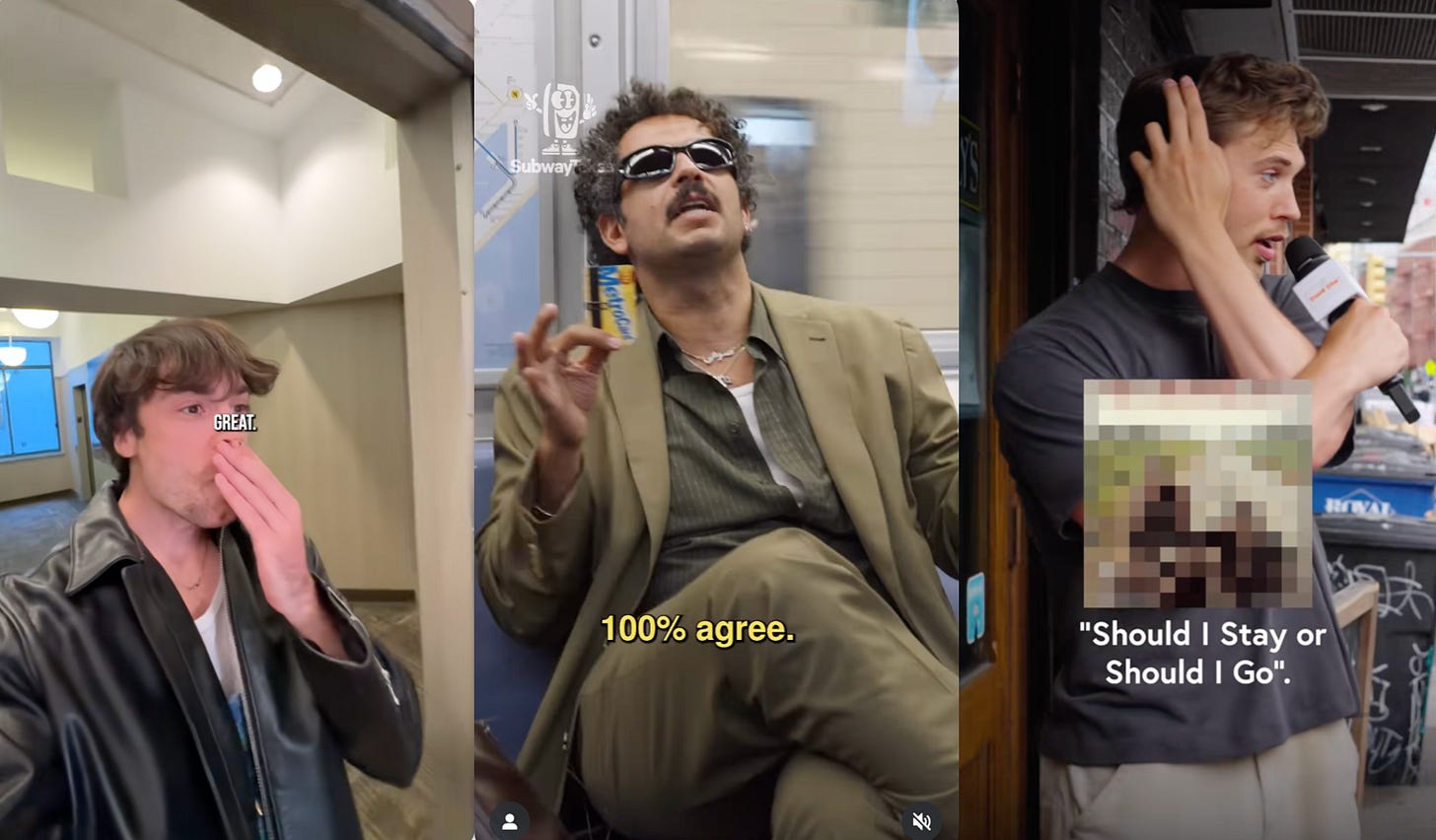
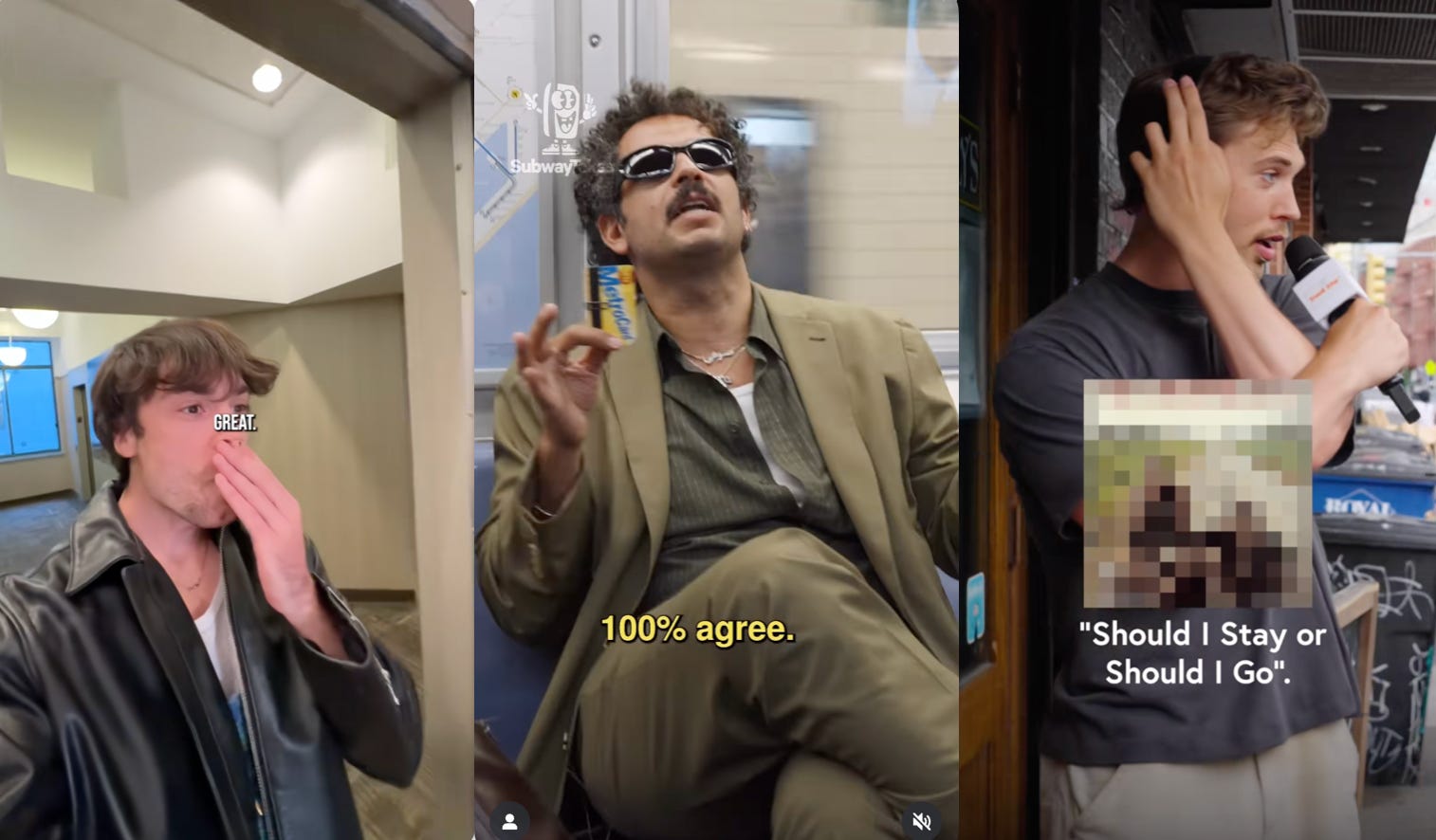
Here’s a few TikToks:
-
A show where a guy tours rich people’s apartments
-
A show where a guy interviews people on the subway
-
A show where musicians and celebrities identify artists based on a few seconds of music
Repeatable, identifiable. Consistent branding so that if you see it once you recognize it. Often hosted. Ripe for branded integrations.
These are shows, my friend.
When Quibi launched in 2019-20, we were just exiting the era of bespoke virality. Creators, publishers, and aggregators were posting an incredible volume of one-off vids in the hopes that a few would pop and pay for the whole enterprise. Sometimes the videos had some connective tissue in tone or aesthetics, but they were all essentially one-offs.
Perhaps that’s why there was so much skepticism around Quibi building a platform around Hollywood-style series storytelling.
The conventional wisdom was something like: Television is for olds → These guys are trying to do television on phones → The olds who watch TV don’t watch stuff on their phones, and the people who watch stuff on their phones don’t want TV, you dummies.
And yet here we are, shows won. Creators and publishers figured out that algorithms are designed to serve you more of the same, so if you produce videos that are similar to each other (aka, produce 10 episodes of 1 show rather than 1 bespoke video 10 different times) you can create predictability around performance and make more money.
Subway Takes (which recently got some shine in the New Yorker) is the perfect example. It uses the aesthetics of social video in 2025, but everything else about it is classic TV: clear format, identifiable elements, a host we love. Late-night shows might be disappearing from actual television, but the pipeline of interview shows where celebrities can uncork relatable anecdotes while promoting upcoming projects remains strong.
2. Quibi was right about short-form
You wouldn’t know it by reading Substack, where, finally free of the suppression of editors and middle managers, writers have by and large exposed themselves as length merchants uninterested in the Ethical Blogging of a crisp 100-300 words… But people like it when you make it snappy.
TikTok went supernova at a moment when Facebook/Instagram, YouTube, and Snapchat were chasing length in a bid to bring more premium-seeming, TV-like content to their platforms. While there is clearly a demand for that kind of programming (just look at YouTube today), pursuing long-form at the expense of short-form was a strategic error that these platforms recognized and attempted to fix as soon as they realized they were inside the mouth of the whale and about to be swallowed whole. Facebook/Instagram threw itself into Reels, YouTube launched Shorts, Snapchat launched Discover, etc.
Quibi wasn’t exactly Vine in terms of length. You would probably define most of their 5-10 minute shows as “midform.” But they at least rejected the conventional wisdom that the longer something is, the more premium it is.
3. Quibi was right about phones.
People really do watch everything on their phones now. Even movies and stuff. It’s crazy. You’ll be on the subway and someone will be watching a Netflix show that cost tens of millions of dollars to produce on a cracked five-year-old iPhone.
What a world!
Quibi got a million things wrong. No need to rehash. But some of the core assumptions were pretty much spot on.