
Flipping the script, marketing in a fragmented world, AI as another team member, MCPs, 63 principles for living and what is the meaning of life?
This week’s provocation: Sometimes, in order to win, you need to change how the game is played

For most of basketball’s history, the three-point line was treated like a novelty. Scoring from behind it was a risky, occasional weapon rather than a winning strategy. The real action, went the consensus, happened right near the basket where size, strength, and height won out. Stephen Curry, an undersized guard from a small college, changed all that.
At 6 foot 3 inches tall, Curry was not only considerably shorter than the NBA average, but he was also slight in frame, making him a less than obvious choice for the draft. He played college basketball for three years, overlooked by scouts who thought he was not athletic or tall enough. But what Curry lacked in physical dominance, he made up for in range. Absurd, almost theatrical range. And with it, he began to rewrite the geometry of the game.
Curry didn’t just shoot threes, he made them from distances that were previously considered reckless. He didn’t need a clean look or a set shot. He could pull up in transition, off the dribble, off balance, with defenders draped on him. And more importantly, he did it efficiently, simultaneously breaking records for accuracy and volume. As his confidence grew, so did the permission he gave others. Defences had no choice but to stretch out further and further, opening up new spaces and breaking old defensive systems.
Curry’s team, The Golden State Warriors, built their game around his shooting ability. Instead of playing faster, they played wider. They spaced the floor in ways that no team had done before. They turned shot selection orthodoxy on its head, prioritising threes over post-ups, and movement over isolation. Curry forced the entire league to change how it scouted, trained, and defended. The centre of gravity in basketball literally moved further away from the basket.
Stephen Curry is a wonderful example of challenging orthodoxy and redefining what winning looks like. He turned a perceived weakness into a strategic advantage. He played a version of the game that no-one else was prepared for. Stories like this (there’s a wonderful write up of it over on the BBC) are inspiring examples of changing how the game is played. Inspiring for us as individuals, but also inspiring for how leaders with imagination can create advantage, apparently out of nowhere.
The story of how Dick Fosbury reinvented the high jump is often used in this context, but that too is a story full of nuance. Ian Leslie authored my favourite write up of the innovation lessons from what Fosbury did. I’d done my own a couple of years earlier but Ian’s turn of phrase and expansive take is better. If we’re bad at something, he says, maybe we can be good at it in a different way. Fosbury was a lousy straddler (the dominant technique at the time) but persisted in his belief that there had to be a better way to jump. He was a civil engineering student and used his understanding of physics to work out that jumping backwards would mean that his centre of gravity would pass below the bar, meaning that he could jump higher than athletes using the traditional techniques. This was a classic example of using knowledge from one domain to disrupt norms in another.
At the same time landing pits changed from sand to foam, enabling the innovation to happen (equivalent to a change in the business environment which enables new possibilities). Rather than breaking the rules of how the high jump worked, Fosbury interpreted them in a totally different way. He worked to finesse his technique but by his own admission was not the hardest working athlete in the sport. He was mocked by many for his unusual jumping style but went on to win the Gold medal in the 1968 Olympic Games in Mexico City.
Reading about Stephen Curry sent me down a rabbit hole of game-changers this week and here are four things I learned from some of my favourite examples:
-
Changing the game can be as much about brand and identity as it is about strategy. For decades the women’s game in tennis was dominated by a style focused on finesse and long rallies. Serena Williams, with her explosive power, aggressive baseline play, and unapologetic physicality, redefined what excellence in women’s tennis looked like. But she also redefined what a champion could look and sound like through her fashion choices, body image, and open stance on race and motherhood.
-
True innovation often comes from rejecting the metrics everyone else is obsessed with. In the mid-2000s, the games console wars were defined by a single metric: raw power. Sony and Microsoft were locked in an arms race for better graphics, faster processors, more cinematic experiences. Technological supremacy, it was widely assumed, would determine who won in the gaming market. Nintendo looked at that race and thought: What if we don’t even enter it?. Instead of building a more powerful console, Nintendo released the Wii, a low-spec machine with an unconventional controller that responded to physical motion. It was designed not for hardcore gamers, but for everyone else, including people who had never picked up a controller. The Wii wasn’t just a product, it was a reframing of what and who gaming was for, from an immersive solo experience to an accessible social experience. Despite being technologically weaker, it outsold the PS3 and Xbox 360 for years. Nintendo didn’t just change the hardware, they changed the audience, the use case, and the definition of value.
-
Weaponise what others see as boring. Most top-level chess players study openings obsessively, trying to memorise vast libraries of lines and counter-lines. For decades, games were often decided in the first 20 moves, with players aiming to gain an advantage through deep preparation. Instead of trying to win the opening theory war, Magnus Carlsen chose to focus on much lesser explored ‘quiet’ openings and then would drag his opponents into long, grinding middle and endgames. He shifted the game from a battle of memory and preparation to one of endurance and decision-making under fatigue.
-
Advantage belongs to those who prepare not just for change, but for what the change enables. In 2014, Formula 1 introduced one of the biggest regulation changes in its history: the shift to turbocharged hybrid power units. For most teams, this was a compliance issue that demanded quick adaptation. But for Mercedes-AMG Petronas, it was a strategic inflection point that they had been quietly preparing for for years. Recognising that the sport would inevitably shift towards cleaner, more efficient performance technology, the team had started exploring advanced hybrid engine architecture as far back as 2007. When the regulations kicked in and their competitors were scrambling to adapt, Mercedes didn’t only already have a working engine, they had a dominant one. In fact their power unit was so superior in performance and reliability that it reshaped how races were run. The advantage wasn’t just on the track, it was systemic. The team structured itself around cross-functional engineering, data integration, and relentless iteration. Mercedes went on to win both the Drivers’ and Constructors’ Championships for seven consecutive seasons. The race had begun before anyone got to the starting line, and Mercedes were the only ones to realise it.
As we move faster and faster into the era of AI, I’m left thinking that the winners won’t only be the organisations that can do what everyone else is doing but slightly better. It will be the businesses that can reimagine advantage by using AI to change the way in which the game is played. What are the hidden assumptions that everyone in a market accepts as true? Where are the rules outdated or designed for a different era? What are the new and different dimensions for competition? Companies that can answer these questions will be the real disruptors.
Image: Keith Allison from Hanover, MD, USA, CC BY-SA 2.0 via Wikimedia Commons

If you do one thing this week…
I’m delighted to say that we have not just one but TWO brand new episodes of Google Firestarters now out. In the first, author Kevin Chesters gives a masterclass on the power of story for brands. He talks about emotion connection, the power of efficiency, and what we can learn about good storytelling from people as diverse as a vicar, a sculptress, a journalist, and a teacher.
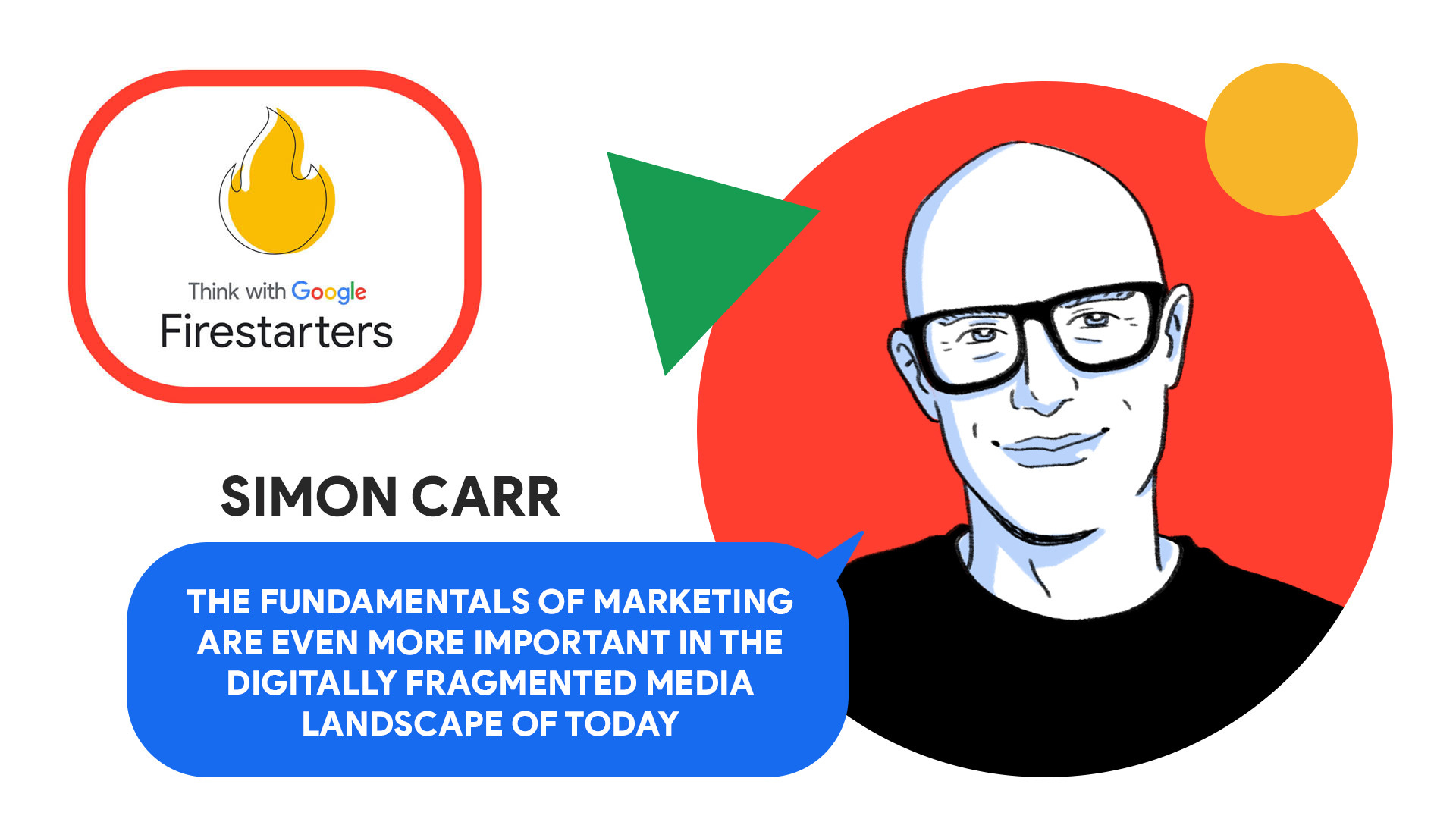
The second features the super-smart Simon Carr, CSO at Hearts & Science, talking about marketing in a fragmented media world. I loved Simon’s thinking about navigating the complexity of modern media using category entry points to drive consideration and growth, his thoughts about building brand fame from the bottom up, tapping into meme culture, and understanding category culture.
I learned so much from both conversations.
Links of the week
-
‘Have humans passed peak brain power?’ asked the FT. Some quite amazing data in this piece about the broad decline we seem to be seeing in verbal and numerical reasoning capabilities, and the growing struggle for people to concentrate
-
Some fascinating research shared by academic Ethan Mollick based on a preregistered field experiment with 776 professionals at Procter & Gamble to understand the impact of AI on collaboration and performance. Staffers working on real product innovation challenges were randomly assigned to work with or without AI. The study found that individuals with AI matched the performance of teams without AI, suggesting that AI effectively replicated the performance benefits of having a human teammate
-
Meanwhile the WEF predict that 39% of workers’ existing skills will become transformed or outdated by 2030 (HT Bruce Daisley)
-
Buzzword of the week goes to MCP – the potentially game-changing technology which enables AI agents to easily connect with other software systems
-
Research from Sparktoro on the impact of GenAI on search suggest that searches on Google in the US actually went up 20% last year (Google themselves have said that AI overviews encourage people to search more). Other studies (Seer Interactive) have shown that AI Overviews do indeed result in fewer clicks but given the increasing volume of searches overall we’re a pretty long way from ‘zero-click search’
-
‘We risk delegating more decisions to systems that can process vast amounts of information, but lack the integrative judgment that comes from embodied, emotionally-grounded understanding.’ A good post from (friend of ODF) Michael Bayler on the risk that we’ll increasingly adapt ourselves to fit AI’s limitations.
-
It turns out that the origins of the Dunning-Kruger effect came from a study inspired by a bank robber who thought his face would be invisible to cameras if he rubbed lemon juice on it (like invisible ink)
-
I liked Nabeel Qureshi’s 63 principles for living, particularly this one – ‘Pay attention to your production/consumption balance. If you’re only consuming and not producing, fix that.’ (HT Ian Leslie)
And finally…

Some profound (and some less profound) answers to the question ‘what is the meaning of life?’ from a range of people including a palliative care consultant, a happiness expert, and a holocaust survivor.
Photo by Belinda Fewings on Unsplash
Weeknotes
This week I did some teaching at Imperial Business School (one of my favourite regular sessions), ran a session for leaders at a large CPG client, and generally caught up after my week away last week (which was lovely). Next week I’ll be out in Dublin working with my Diageo client and collaborating again with Trinity Business School.
Thanks for subscribing to and reading Only Dead Fish. It means a lot. This newsletter is 100% free to read so if you liked this episode please do like, share and pass it on.
If you’d like more from me my blog is over here and my personal site is here, and do get in touch if you’d like me to give a talk to your team or talk about working together.
My favourite quote captures what I try to do every day, and it’s from renowned Creative Director Paul Arden: ‘Do not covet your ideas. Give away all you know, and more will come back to you’.
And remember – only dead fish go with the flow.