To become a travel super app, you must focus on removing every friction from the trip.
Not so long ago, Brian Chesky, Airbnb’s CEO, announced that his company would launch a new product every year aimed at generating an additional billion dollars in revenue. He started by reviving “Experiences,” but since then, not much has been announced.
One of the most obvious pain points I see with Airbnb is groceries. Unlike hotels, which cater more to corporate travelers, Airbnb leans heavily into the leisure segment. Guests typically come in groups, stay longer, and prefer spending time at the property, especially in the kitchen, instead of just crashing for the night.
There is nothing more annoying that arriving in an empty Airbnb, except may be having to do groceries before arriving. I’ve lost count of how many times I’ve rented an Airbnb with friends and found myself scheduling a supermarket pickup on the way there. That’s fine if you have a car. But when you arrive by train or plane, it becomes a logistical headache.
Given the sheer number of bachelor parties hosted at Airbnbs, I bet most of the grocery lists are easily predictable: snacks + booze! the potential for partnerships with brands is enormous. Like supermarkets, Airbnb could take a cut and sell prime placement on their app for on-demand grocery orders. To make it easy, they can also have package pre-made based on the number of guests.
From a data and loyalty perspective, the upside is even more interesting. I often say the three entities that know you best are your phone, your bank, and your grocery store. They see how you truly live. By linking grocery or provisioning services to its platform, Airbnb could begin collecting signals that go far beyond check-in and check-out. Frequent organic wine purchases? That’s a cue for upscale host recommendations. Vegan snack order? Push more health-conscious property add-ons. This kind of behavioral data could power a loyalty model beyond just count nights stayed, and understands guest personas, what they value, how they celebrate, what they consume.
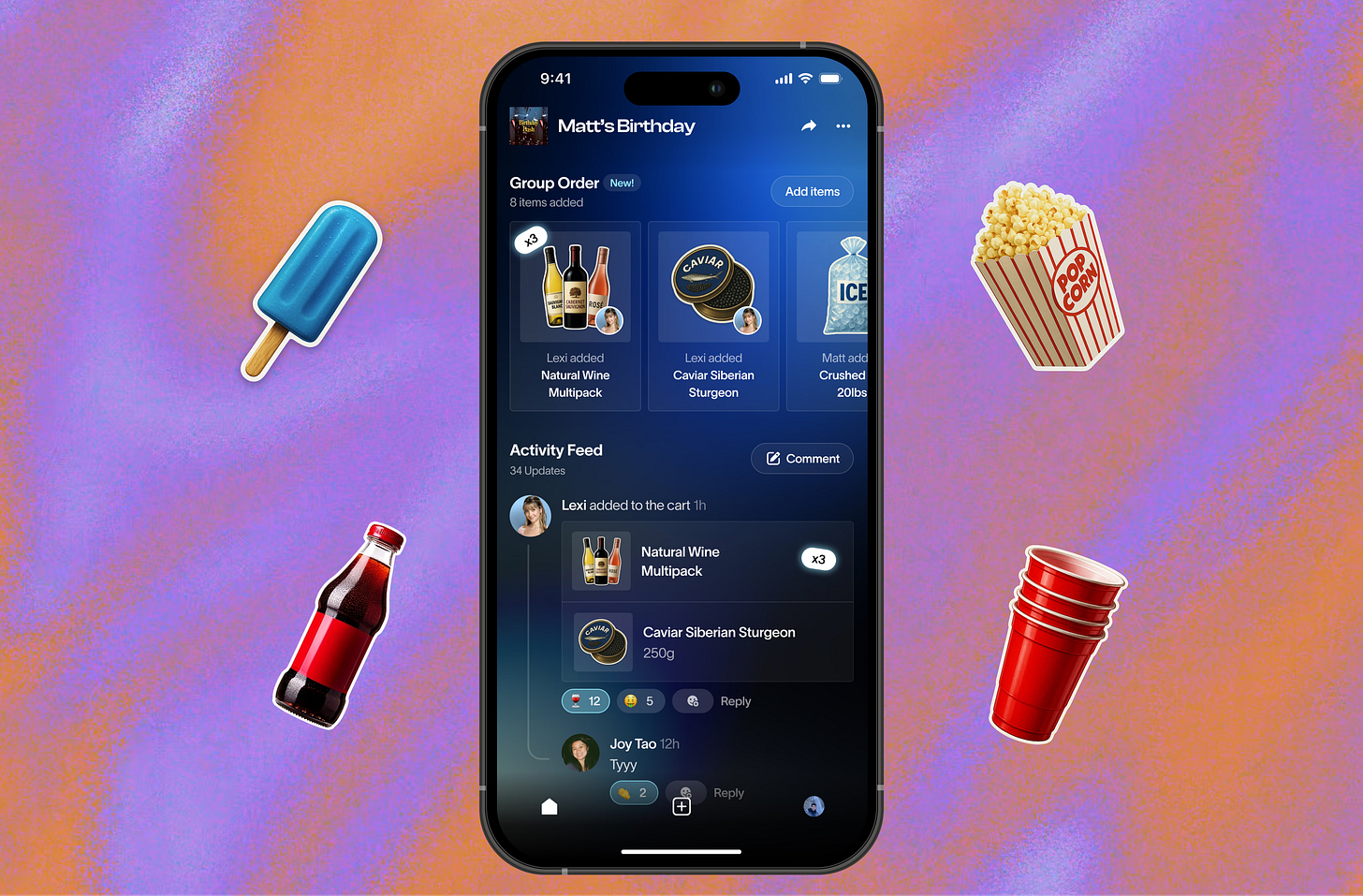
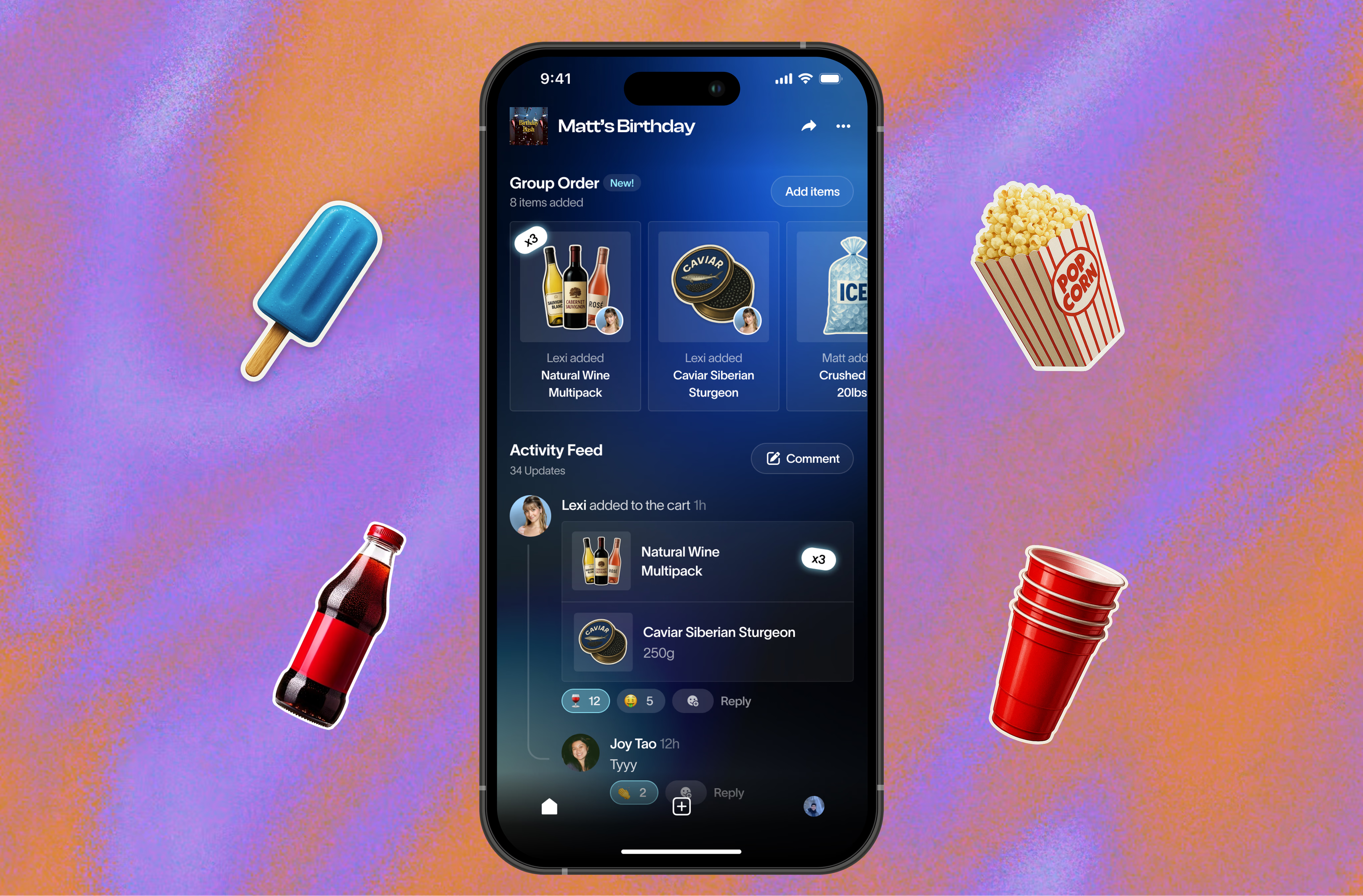
Honestly, the idea seemed so obvious to me that I started doubting myself when Airbnb didn’t launch it. Maybe they knew something I didn’t. But perhaps I wasn’t so far off, because Partyful, a party-planning app, just announced a partnership with Fizz.

The promise of the Fizz x Partyful partnership is simple: never show up to a party empty-handed. Invitees can join a group order via a link, select what they want to bring, and pay for it, no need for Venmo, Tikkie, Tricount, or whatever app is used in your country. It’s smart. I’d bet the next feature they build is split billing, so the most organized person in the group can handle the order and still get reimbursed fairly.
Verticalizing the Airbnb experience makes complete sense if the company wants to become the “travel super app” it claims to be. Group chat was a great start for organizing the dreaming phase, but they need to go further: transport from home to the Airbnb, grocery delivery, cleaning services, and more. Each of these moments is transactional, and where there are transactions, there are interchange fees. If Airbnb can become the one-stop shop for all travel-related purchases, it’s much easier to hit that billion-dollar mark outside of stays.
Think of what WeChat became in China or what Grab is attempting in Southeast Asia: travel, communication, payments, insurance, all in one interface. Airbnb already owns your sleeping time when you stay. With the right partnerships, it could also dominate everything that comes outside the 8 hours of sleep.
My next pet peeve while traveling? Luggage. I hate carrying it. So my next Airbnb brainstorm will be about how the company could borrow a page from Japan and finally solve that, too.
If you’ve enjoyed this, feel free to pass it along to someone who might too. I don’t follow a set schedule here, sometimes it’s once a day, sometimes once a month, but when something’s worth sharing, I’ll hit send. Thanks for reading.