|

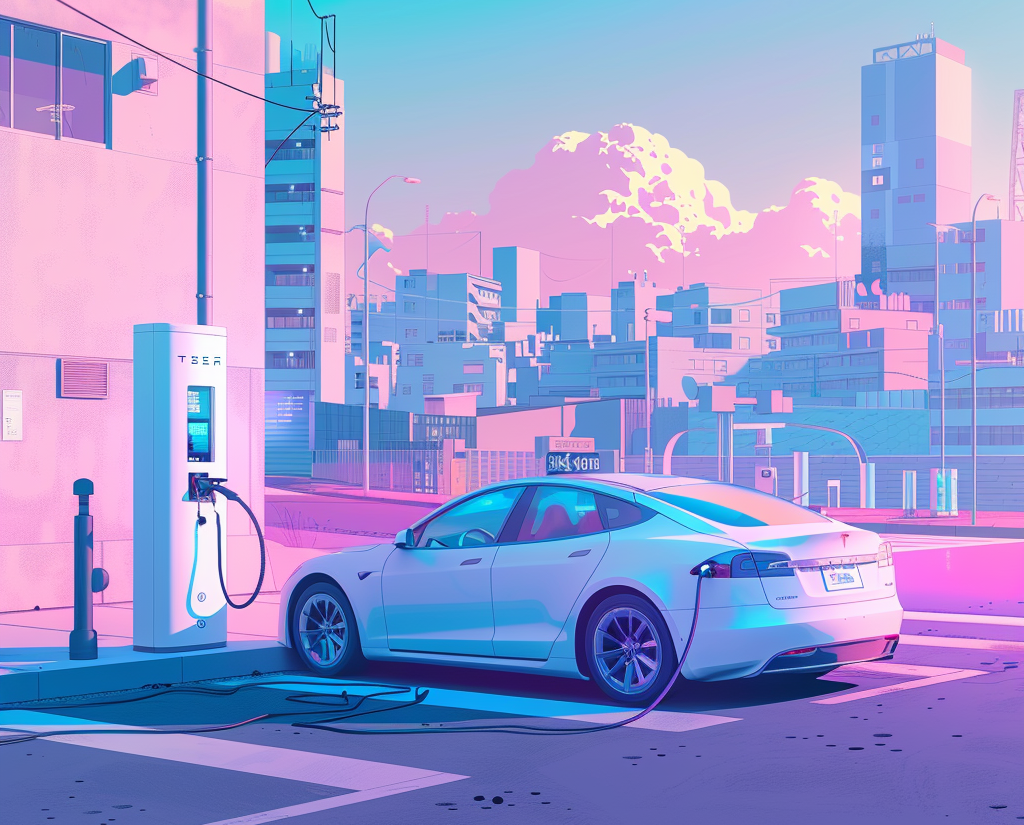


Chart #5: Debunking EV Climate Myths 🔋
While the debate about the environmental impact of EVs has seen a shift towards more positive recognition, some remain skeptical, questioning whether EVs are truly greener than traditional gas-powered cars, primarily because of their manufacturing process.
Another study by BloombergNEF gives us a clear answer: yes, EVs are definitively cleaner.
💡
The report shows that in regions like the US and Europe, an EV reaches the emissions breakeven point with traditional vehicles in less than five years.
Check out the full report for a deeper dive, including specific regional breakeven points and how smart charging practices can further reduce EV emissions.

Chart #6: Aviation’s Battle for Sustainability ✈️
It’s time to switch dimensions.
While the automotive industry has made notable strides in decarbonization, aviation tells a different story, one that’s far less optimistic.
According to analysis from aviation data provider Skailark, CO2 emissions from the aviation sector in Q1 2024 not only rebounded from the pandemic but exceeded the peak levels of Q1 2019; see the green line below.

What is happening in aviation?
💡
Despite major advancements in aircraft efficiency, these improvements have been overshadowed by an increase in passengers and, consequently, more flights.
In simple terms: aviation has not yet found a way to decouple growthfrom emissions.
Chart #7: The Impact of Low-Cost Carriers 🛫
One of the primary drivers behind the rising emissions in aviation is the expansion of low-cost carriers.
This trend is evident when examining the CO2 emissions of the top polluting airlines in Europe in 2023, as ranked by Transport & Environment.
More telling than the ranking itself is the growth compared to pre-pandemic levels, as shown in the rightmost column of the chart.

As you can see:
- Lufthansa, ranked #2, has decreased its total emissions by more than a quarter compared to 2019, in line with most other full-service carriers.
- Ryanair, on the other hand, Europe’s top polluting airline for the third consecutive year, emitted 15 Mt of CO2 in 2023, so 23% higher than its pre-COVID levels.
- Wizz Air, another European low coster, has seen its emissions grow by a staggering 40% during the same period.
With these figures in front of us, it’s hard to imagine how a net-zero aviation future can be realized.
Chart #8: The CO2 Impact of Different Air Travel Classes ✈️
While it’s easy to scapegoat low-cost carriers for their environmental impact, it’s essential to recognize the broader context.
The democratization of air travel, certainly facilitated by low-cost carriers, has made global exploration and cultural exchange more accessible to a broader audience, effectively “shrinking our world.”
💡
There is a second dimension to examine besides the low-cost carrier problem: the impact of different cabin classes.
A visualization by Circulairuty’s CEO Alex Chikhani highlights the average CO2 emissions per passenger kilometer by cabin class (based on calculations for a typical London Heathrow to Dubai flight using a Boeing 777).

What does the data show?
- Passengers in first class, on average, emit 5-6 times more CO2 than those in economy.
- A seat in business class results in nearly three times the emissions of an economy seat.
This discrepancy raises really important questions about sustainability in air travel that, in my opinion, deserve much more public attention.
Chart #9: The Investment Imperative for Aviation 💸
While it’s straightforward to highlight the environmental challenges of aviation, finding solutions is significantly more complex.
Aviation is often cited as one of the toughest sectors to decarbonize due to its technological complexities.
What’s clear, however, is that any hope for change hinges on proactive steps. And meaningful action demands substantial investment.
💡
Investing in cutting-edge SAF facilities, groundbreaking research into electric propulsion, and other revolutionary initiatives is crucial.
The Sustainable Aero Lab outlined in its latest research article that most experts estimate radical innovation in new energy and aircraft technologies will require about five trillion USD by 2050—amounting to an annual innovation budget of $175 billion USD.
This starkly contrasts with the currenttotal annual R&D spending in the aviation industry, which is approximately 23 billion USD.

The key takeaway: To realistically stride towards a net-zero future, the aviation industry must secure an unprecedented level of investment in breakthrough technologies.
But where is all this money supposed to come from?
Chart #10: Investing in Aviation’s Future 💡
Speaking of investments and keeping our tradition of ending OneChart on a positive note, let’s talk about where aviation’s available innovation budget is heading.
The fantastic Anna Schneider from the Lufthansa Innovation Hub recently compiled a detailed analysis of investment trends in the aviation sector for TNMT.com.
Her findings?
💡
Over half of all available budgets by aircraft OEMs, airlines, and airports are being invested in tech companies and startups that develop innovative solutions to enhance the efficiency of aviation’s core functions.
This includes innovations in airport ground operations, optimization of flight paths, and, crucially, developing better materials for new aircraft designs.
Such investments are a beacon of hope, indicating that future aircraft fleets and the operations surrounding them are expected to reduce CO2 emissions significantly.

That’s it for this month. Thanks for reading.
See you again in June.
Until then, save travels.