Greetings!
We’ve moved from marveling about AI’s potential to puzzling over how to pay for it. The price tag seems to grow every day. On Thursday, Tesla CEO Elon Musk suggested Tesla will need so many chips for its robots and self-driving cars that it might build its own chip factory. He also said Tesla would have to spend “tens of billions” to train the AI in its robot. Meanwhile, his archrival, Sam Altman, is pursuing so many investment initiatives that his finance chief (briefly) opened the door to the idea of the federal government helping guarantee the financing for AI chips.
One group of companies that may have more funding options are the hugely profitable tech firms, such as Google, Microsoft, Meta Platforms and Amazon. These deep-pocketed giants so far have been mostly financing their AI expansion through the cash their businesses throw off, although that’s changing, as this deal done by Meta demonstrated. Last week, Tony Kim, who runs BlackRock’s global technology funds, pointed out in an appearance on The Information’s TITV that given the strength of their balance sheets, the biggest big tech companies could afford to borrow trillions of dollars between them. Imagine what that would mean: Instead of being deep-pocketed giants able to spend freely on whatever struck their fancy, these companies would suddenly be forced to think about every penny they spent. That might not be such a bad thing in the long run, at least for shareholders.
In the TITV interview, Kim estimated that the 10 biggest tech firms between them generate roughly a trillion dollars in annual earnings before interest, taxes, depreciation and amortization—and have no net debt (meaning their cash reserves are higher than any debt they carry). Given the debt levels companies in other industries often take on, he asked why tech firms couldn’t borrow at “one, two, three times net debt to Ebitda” to help fund capex for AI. In this (very speculative) scenario, Google, which now has $100 billion in cash and only $21 billion in debt, could end up with, say, $450 billion in debt and perhaps just $20 billion in cash.
There is of course enormous risk associated with borrowing money for something that has an uncertain return, which certainly describes AI. But this isn’t like borrowing money to buy crypto, which has no underlying value. AI has the potential to create real benefits for businesses, so the debt could enhance long-term returns. As their AI spending increases, big tech companies could become net consumers of cash rather than net producers—at least until AI revenues ramp up. Such a bet may pay off, but life in tech won’t be the same.
This Week’s Earnings
The flood of tech company earnings will dwindle sharply this week as we await enterprise software firms, which usually make their announcements a few weeks behind consumer-focused companies. Among the few companies reporting this week are Instacart and CoreWeave. Here’s what analysts are expecting from both, courtesy of S&P Global Market Intelligence.
Instacart (Monday):
Revenue: $933.32 million +9.5%
Earnings per share: 0.50 +11%
CoreWeave (Monday)
Revenue: $1.283 billion +120%
EPS: (0.51) (EPS for year-earlier quarter not available)
In Other News
• Lawyers for Elon Musk argued that his federal lawsuit against OpenAI and its CEO Sam Altman should proceed to a trial, according to a legal document filed Friday evening. More here.
• Nvidia CEO Jensen Huang said on Friday that there are “no active discussions” about selling the company’s most advanced Blackwell chips to China. In a televised interview with reporters held in Taiwan, Huang also said Nvidia is currently not planning to ship any products to China. See our story on this subject from Thursday.
• BuzzFeed’s revenue plummeted 17% to $55.6 million in the third quarter compared to the same period a year earlier. Softer advertising demand than in 2024, when the company reaped the benefits of election-related advertising, accounted for the plunge. BuzzFeed reported an operating loss of $7.8 million compared with a profit of $2.4 million a year earlier.
Today on The Information’s TITV
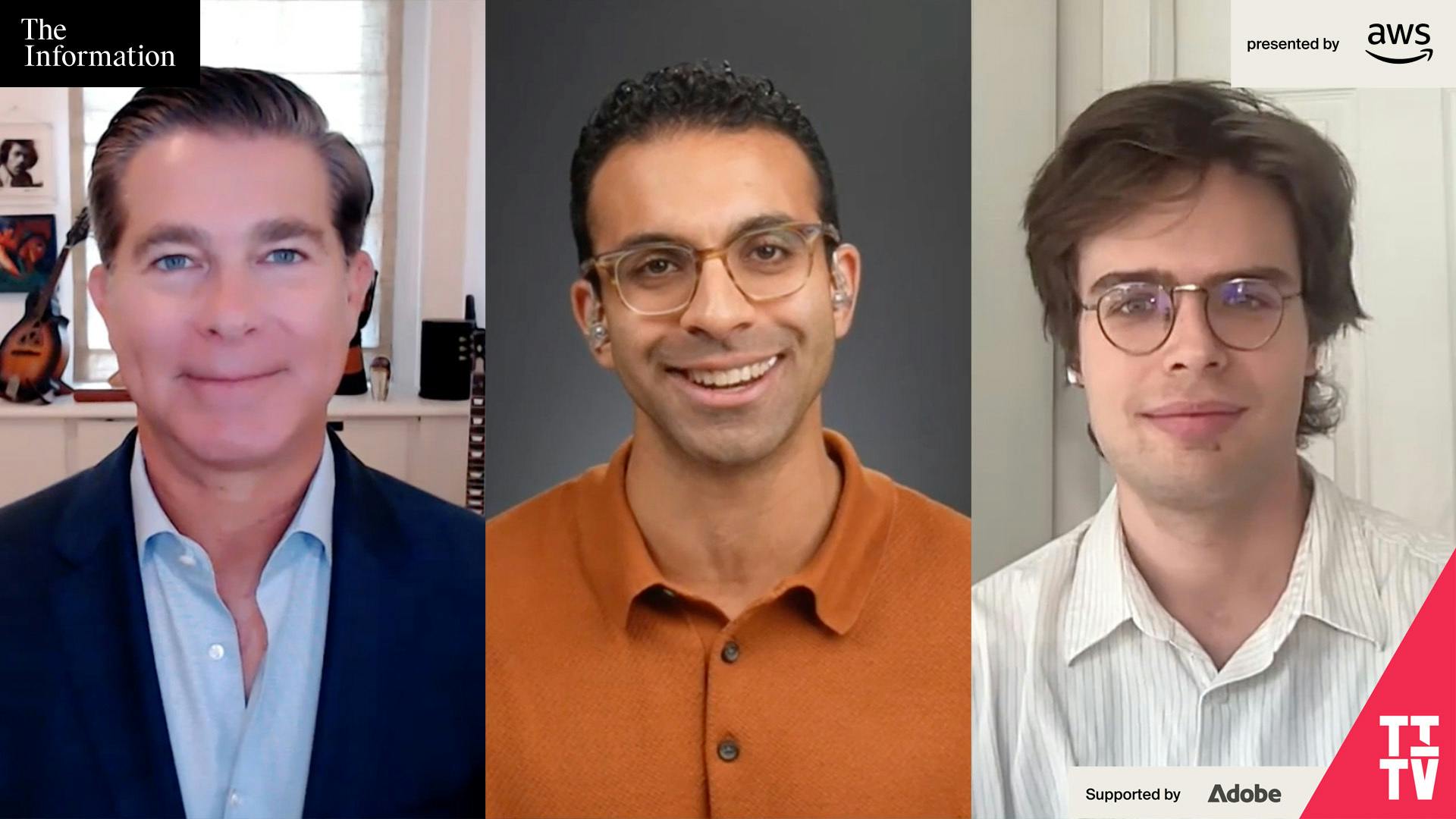
Check out our latest episode of TITV in which Akash speaks with Tesla investor Ross Gerber and our Elon Musk reporter Theo Wayt about Musk’s $1 trillion pay package.
Recommended Newsletter
Start your day with Applied AI, the newsletter from The Information that uncovers how leading businesses are leveraging AI to automate tasks across the board. Subscribe now for free to get it delivered straight to your inbox twice a week.