Timothée VialeSoon the next edition of TEFAF New York will be upon us. Can you give us some insight into what you’ll show in your booth?
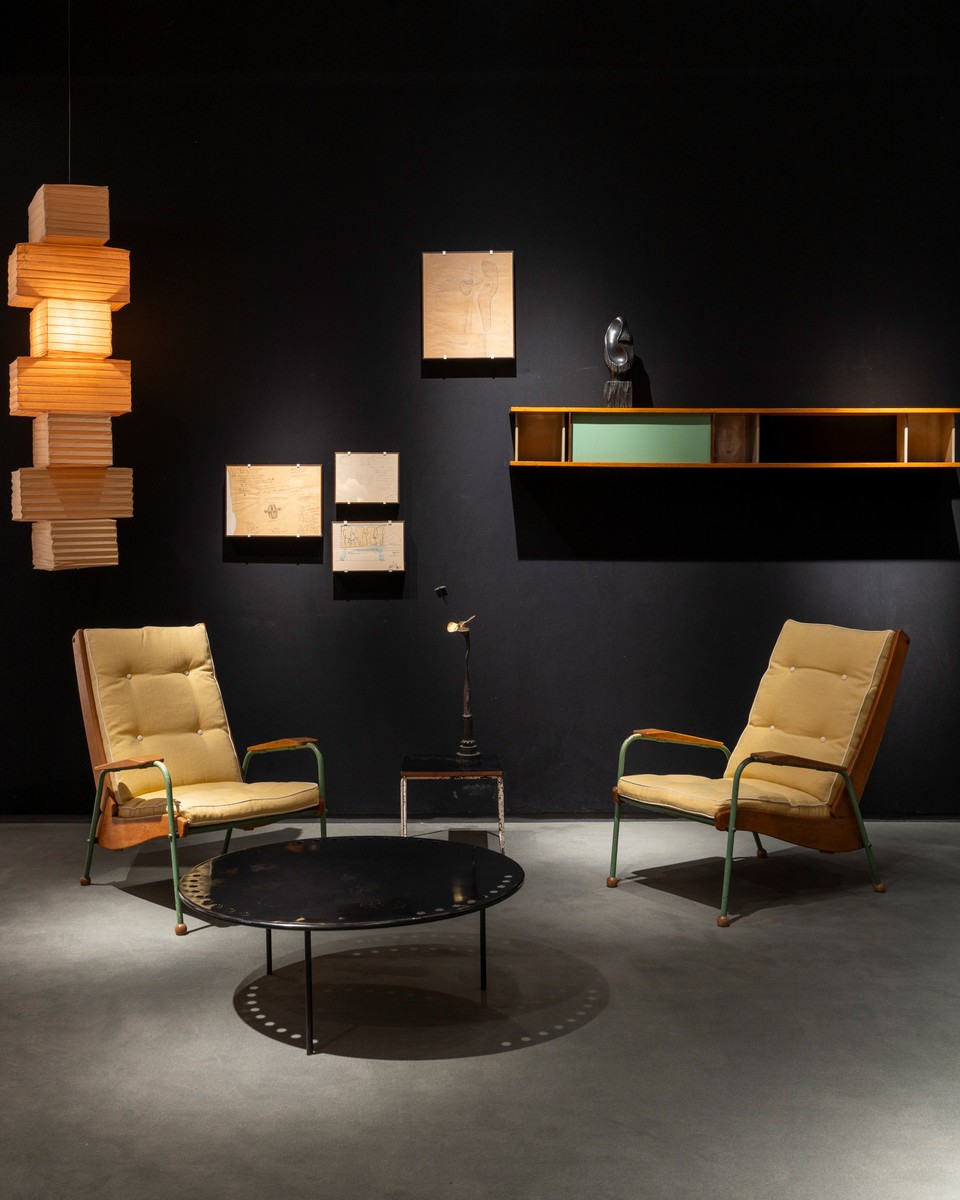
François LaffanourYes, I have chosen very specific pieces that match the level of that fair, which is top tier. I decided to bring mostly Jean Prouvé furniture. We will be showing his stepladder, for one, which is something unusual in the work of Prouvé. We will have a Présidence desk, which is already an iconic piece, of course, but this is a special one that has been beautifully utilized. The people who owned it used it so much, and I like it for that reason. You can see the passage of time in it. Also, the color: the top is black and the legs are green, which is an amazing combination. We’re also bringing two armchairs by Prouvé in the same green. Alongside those three, I decided to include some pieces by José Zanine Caldas, a Brazilian designer who offers an engaging alternative to the better-known French designs of the 1950s. His works have a powerful simplicity that goes perfectly with the Prouvé furniture.
TVCould you speak to the continuing relevance of midcentury design in the contemporary moment, seventy or so years after many of these pieces were produced?
FLIt’s been seventy years since they were made, but I’ve been showing them for forty years now, so it’s an era I’m familiar with. From the beginning, my interest in these architects and designers lay in their ability to reflect what the twentieth century was—namely a century of social revolution. It started with the Russian Revolution, and afterward continued in new ways across the globe. The furniture carries this history, and the effects of these changes continue to have huge relevance in our lives in the twenty-first century. The types of furniture, the types of production—the works of these architects and designers were democratic, in the sense that a piece could be mass produced for a school, for a president, for a university, for a minister. And I think that idea, in terms of furniture and decor, reflects an ideology that is different from all the types of objects produced and collected before.
To produce something that was beautiful and for everybody—as opposed to something precious, expensive, and limited—appealed to me from the beginning. For instance the Bauhaus, this line of people trying to make something as beautiful as they could for many people, has been a major focus. These were talented designers who chose to work in what could be considered simple materials, but they were doing something very original in terms of technology. The materials were not so rare or expensive, but the way the designers used them and treated them was extraordinary. When you see examples of Prouvé’s work at the University of Paris, for instance, where he designed bookcases, tables, or you look at the bedrooms he designed for students, they were absolutely magnificent. Everything was so elegant and original.
TVAre there are any interesting connections between the works you’re showing and New York?
FLWell, Jean Prouvé went to New York a few times, and Charlotte Perriand was celebrated there quite early in her career. But mainly we go to New York because a large portion of our clients are in the States. It’s been true since I started, that the people there are more sensible to the style of work we specialize in. They have a higher capability of understanding and collecting these pieces. I’ve often wondered if the Americans, especially in New York, are more open to these designers because New York shares an aesthetic lineage: big buildings, metal, glass, concrete. The industrial aesthetic fits very well with the look of the lofts, the buildings, the industrial production that is that city’s history. There is also the fact that so many contemporary art collectors are in New York. This furniture is humble, discreet, so you can mix it with a wide variety of artworks, for instance bold paintings and sculpture, without conflict. You can have a table by Prouvé or Perriand alongside a painting by Pablo Picasso or Andy Warhol without them competing for attention.
TVYou’ve spoken about the origins of your interest in these designers, but when did it truly begin?
FLI started a very long time ago. Unfortunately, I’ve become old. [laughter] My initial research and entry into this work began just a little before the 1980s. At that time, the work we’re speaking of wasn’t particularly commercial. It was only very top, top, top collectors coming to me with any interest. It took time, but I knew there was something interesting in the work and lives of Perriand, Pierre Jeanneret, Le Corbusier, and so on, and I had to stick with it. And in a way, I was lucky, because at that time it was easy to buy their works.
TVHow do you see the future—in terms of legacy, in terms of engagement with these designers—of midcentury design?
FLThe future? I think the future is already here, in a way, because it’s so well established all over the world. Works by these designers are in museums globally, so I feel it is safe to say that it isn’t simply a fashion. It’s become something firmly established in the history of our architecture, of our society, of our intelligence. What these designers created exists as a real testament to the importance of the twentieth century and the social evolutions that took place then.
TVSo it won’t disappear anytime soon. I believe you’re also showing works by Richard Texier, a contemporary designer and artist, at TEFAF. Is that correct?
FLYes. I met Texier through a friend five or so years ago. It was perfect timing, as I had been thinking that we needed works in bronze in the gallery. He has created a very original world of animals, mysticism, surrealism, something a little different, which both pairs with our better-known pieces and provides contrast. His works, be they cups or lamps or fine art, are totally in opposition to the radical simplicity of the furniture of the midcentury milieu. This is good. I think if a designer today is doing the same thing that Prouvé or Le Corbusier did seventy years ago, it’s not interesting. That’s why I also like, and work with, Ron Arad and Choi Byung Hoon. They are taking a new route, trying to break the rules and break the commodity, with a facility that everybody can understand immediately. It’s important to mix those things, to look to the future, because we are not dead. We have to live with the future. We have to live with our city, with our world. It’s the same with literature or music; you can adore classical music while also appreciating rock ’n’ roll or hip-hop. Today you can like Mozart and Prince.
TVAnd these contemporary designers, they came to you organically, is that right? You didn’t set out to work with living designers; their work just caught your eye and a relationship developed.
FLExactly. It just happened. Honestly, I don’t have a “business plan”; I’m working with my feeling. And when I met those people, I felt it. That’s my life, and that’s my luck.