Subculture is a partner, not a target
The most culturally influential brands are those with a system for cultural production: part creative studio, part media company, part cultural machine. Their product calendars are in sync with their cultural calendars. Every product moment is also a cultural moment and part of the larger narrative. Creative partners are part of the cultural ensamble, and the core brand attributes – like optimism, speed, or grit – are filtered through the lexicon of a specific subculture. The subculture isn’t a target audience – it’s the creative partner.
This creative partnership yields a hybrid aesthetic: the brand’s core DNA is refracted through subcultural codes with the outcome (cultural products like a collaboration, merch, content, event, etc) that is simultaneously culturally anchored and new.
Example: an outdoor brand refracting resilience through 90’s rave culture. Or a fintech startup expressing speed via skateboarding aesthetics.
Culturally successful brands operate as continuous producers of cultural output, not as intermittent marketers. For them, everything is – or can become – a cultural product: a signal that conveys identity, belonging and taste. To make this happen, they adopt a “show biz” structure, orchestrating a steady stream of collaborations, content, and experience, all mapped to a coherent narrative architecture. Branding becomes less about messaging and more about building a system that emits a cultural gravity on a recurring basis.
The show biz organization
Welcome to the Sociology of Business. In my last analysis, The World-Building Economy, I explored financialization of culture, leading to flattening of business models. If you are on the Substack, join the chat. With one of the paid subscription options, join
EVERYTHING IS MERCH

For this week’s edition of The Sociology of Business, I collaborated with Eugene Rabkin, a prominent cultural writer and founder of StyleZeitgeist. Rabkin and I are cross-posting this analysis both here and on his website. Read it on either or both places, and subscribe to StyleZeitgeist.
How to build a story map
Welcome to the Sociology of Business. In my last analysis, The Show Biz Organization, I explored how to set a business for the constant cultural output. If you are on the Substack, join the chat. With one of the paid subscription options, join Paid Membership Chat
Research report: Anatomy of a collaboration
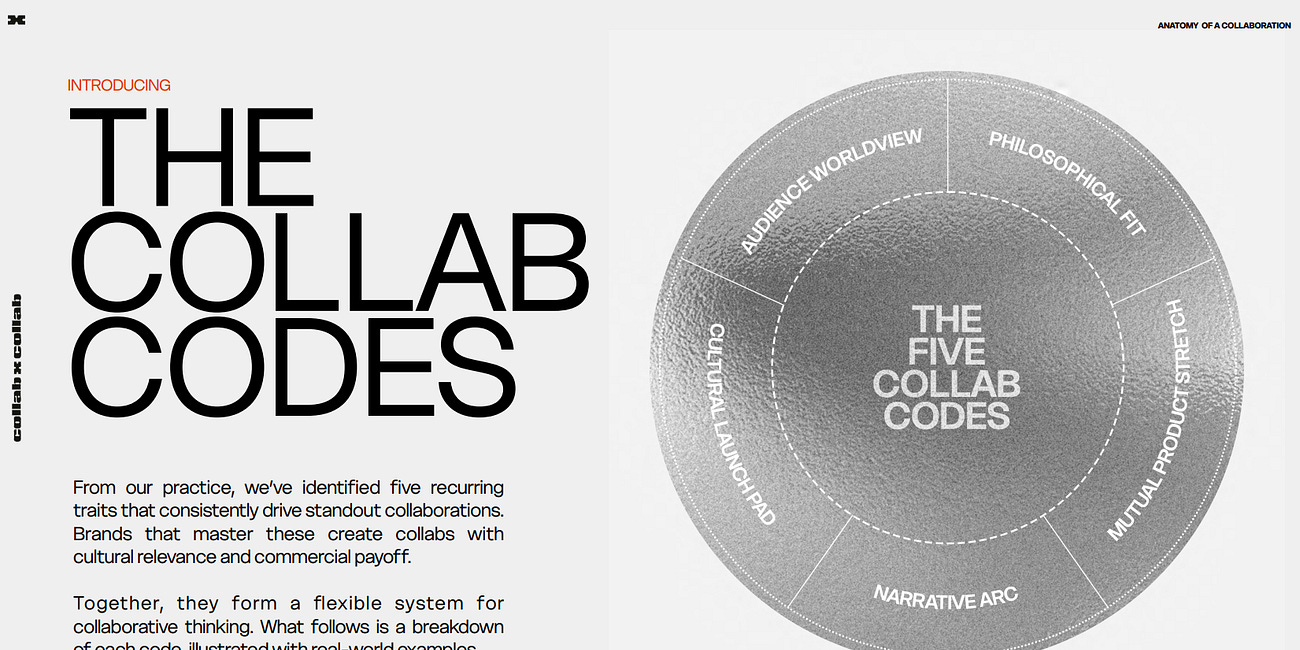
In this week’s guest post, it is our pleasure to welcome Sam Schler, the founder of Collab x Collab, a New York-based brand collaborations agency that combines deep research and hand-on strategy to shape collaborations that resonate culturally and commercially. Sam and his team recently published a research report, “
How to choose the right merch strategy
Welcome to the Sociology of Business. In my last analysis, Don’t sell more, become more valuable, I debriefed you on the conversation that the CEO of Collins, a design consultancy, and I had in NYC and Cannes, France about portfolios of cultural products and value and why companies should care. If you are on the Substack,