|
Next Generation B2B Thinking #NextGenB2B |
October.Last month in addition to our usual curated roundup of the things you need to know but may have missed in B2B… we did a deeper dive on the latest thinking about thought leadership (here, ICYMI). The feedback was positive so we’re doing the same again this month. In addition to the usual content / community and AI x content round-up we’ve collated stuff out there relating to the topic of Influencers and B2B. |
Influencers. |
|
|||

|
We are hearing, reading and seeing A LOT of talk about the growth of influencers in B2B marketing, but not seeing as much evidence of influencer-led content or campaigns out in the wild. Also, how different is this really to what businesses have been doing for a long, long time? What’s going on? This recent piece from Linkedin is a good starting point. It explores the reasons for growth in influencer marketing in B2B right now, chiefly “because it allows them to connect with younger, more sophisticated buyers on a human level.” The evidence they present includes:
Another Linkedin piece from earlier in the year explores some of the relative benefits of B2B influencer marketing, including the ability to reach & engage niche audiences cost effectively. I mean, Linkedin was always going to get behind anything that potentially gets more people using the platform… But so many of the things that are being labelled influencer marketing are things that have always been present in B2B marketing and comms, for instance:
So what’s changed? Maybe the business model? Has it become more transparent and transactional? In the past an expert with a book to promote would treat an interview opportunity with high quality owned media in a similar way to other serious media exposure (true story – Obama’s Campaign CTO agreeing to be interviewed for a tech behemoth’s owned media platform – then tweeting the hell out of the content = win-win…). Nowadays we might be more likely to pay them for content and access to their audience on their channel as well as our own… So perhaps this is simply evolution. In the same way B2B went from a publishing / owned media model to owned and earned media following widespread adoption of social media, we’re seeing evidence of a more converged model of owned, earned – and paid influencer partnerships. Another factor may be that personal brands are becoming more valued and cost effective than media brands for reach, salience, engagement – and trust – with audiences. As the Fast Company piece below points out, “According to a study published by Nature, parasocial influence significantly impacts brand credibility and purchase behaviour. B2B influencers humanise brands and demonstrate the practical benefits of their products in everyday scenarios.” And as the barriers to creating and distributing content independently of big publishing resources come down there’s a new opportunity to engage directly with an audience built by a human based on individual authority and trust. (Presumably with lower overhead and cost than going through a media agency to access the audience of a blue-chip media brand…?) |
|
|||

|
Grow your own We’ve written before about the foundational research paper that Ogilvy published this time last year on the Global Rise of B2B influencers. The thing that really stood out for us in that report was the role of – or rather the potential for – internal influencers. For many B2B businesses their value proposition is literally the knowledge and experience of their people, or the smartness of their tech. So surely the best ‘advert’ for the business is for the people with the knowledge and experience to share that, show what they know, and how that can help clients and future customers? Professional services like the legal sector and regulated markets like investment management tend to do this well, creating platforms to showcase the expertise of their teams. Fast Company reports on Corporate Influence being a new frontier in B2B Marketing, interestingly, via the Fast Company Executive Board, “a private, fee-based network of influential leaders, experts, executives, and entrepreneurs who share their insights with our audience.” This is where the waters muddy though, with the feature advocating for business leaders to do more to build their personal brand and grow their influence to benefit themselves and their business – and to become a potential (paid – ?) influencer for other businesses..? Some businesses are indeed growing their own influencers by supporting their senior people to become creators – e.g. with Deloitte’s principles for content creation, or the influencer training and enablement provided by CISCO to their people. But the real untapped potential here is for all the people in the business to get behind the content being put out on social media by the business. The power and reach of personal networks is estimated to be nearly 10x that of company social profiles and yet the % of employees that are sharing and boosting the distribution of the content their company is posting is typically tiny. So perhaps what we need is training, targets – and incentives – to unlock the latent potential in every company. Who’s doing the influencer thing? What’s working? Back in the Spring, Adweek reported on how Hootsuite were using an influencer-led approach for the campaign to launch their Social Media Career Report via Linkedin, saying that “the results were astounding: 1.2 million impressions, 20,000+ engagements and over 8,100 link clicks within the first few weeks” (But with no comparisons to previous, regular campaigns). Forbes published a piece earlier this year “The B2B Creators are taking over” focusing on the (mainly US-based) B2B creators with significant personal brand followings. (For reference, Steven Bartlett is included as a global / UK example.) I guess there’s not so much proof of B2B influencer performance because there’s no industry association like an IAB out there advocating for B2B influencer marketing, publishing case studies and industry-funded research. Yet. There are however a number of SaaS platforms and influencer database and campaign management tools out there that we’re looking into, including PRophet (PR-focused), Creator Authority (for Linkedin), Amp Creative (B2B influencer management) and Megaphone (subscription-based creator network to boost organic reach). |
|
|||

|
In the meantime, a bit of old-fashioned desk research throws up examples – mainly in the tech space of B2B influencer projects in practice, including:
The only issue is that, to be honest, these don’t really sound much different to things we’ve always done. I’d really, really like to hear from you about good – original – examples of B2B influencer activity out there. On balance I’d describe our take on B2B influence as engaged-sceptical – we’ll continue to explore and experiment with an open mind. Someone with a more definitive view of the whole influencer thing is Mark Ritson. He reminded the audience of this piece from 2018 during his lecture the other week on the history of brand management (the latest in the always-excellent Brands Lectures from the British Brands Group). Warning – typical robust language and the odd scatological reference… |
|
Get me the Demand Squad! The Boston Consulting Group argues that traditional B2B go-to-market functions, particularly marketing, sales, and customer success, are often inefficient and siloed, and propose a solution: the creation of “demand squads”. These are cross-functional teams designed to streamline processes, align content marketing and sales activity, improve customer experience, and accelerate revenue growth. Demand squads are better equipped to identify new opportunities, test ideas, and adapt quickly, making them particularly valuable for tech companies where speed is critical. BCG state this requires no additional resources, offers a straightforward approach, and has been proven successful in a large tech company and an insurance firm. Read more here. |
|
|||

|
Someone described Linkedin as ‘the Work Cosplay Platform’ the other day and it struck a chord. We all know it is FULL of ‘influencers’ telling you EXACTLY WHAT AI MEANS for industry X, job role Y, etc… So we’re happy to share the thoughts of a couple of academics, writing in the MIT Sloan Management Review on the topic of ‘How GenAI changes creative work.’ The authors, Angelo Tomaselli and Oguz A. Acar, highlight key areas where GenAI is disrupting creative work: increased content supply, changes in creative teams, diversity in creative output, and the fluidity of creative output. They argue that while GenAI has benefits, such as increased efficiency and personalised content creation, it raises questions around creative distinctiveness, and ethics. Happily, they provide a framework for businesses to adapt. |
|
A counterpoint to all the AI excitement, Martech looks at « Where AI falls short in high-stakes B2B industries.” And the WSJ looks at (very practical) ways that GenAI can improve marketing and sales in B2B. |
|
|||

|
This week at Adobe Max 2024 conference the announcements included updates to their creative suite including a bunch of new generative AI tools, David Wadhwani, president of digital media at Adobe, said in a statement. “With the demand for content projected to grow as much as ten-fold, we’re empowering creators to scale the use of their content across marketing, HR, and sales teams.” |
Team VOLUME. |
|
|||
|
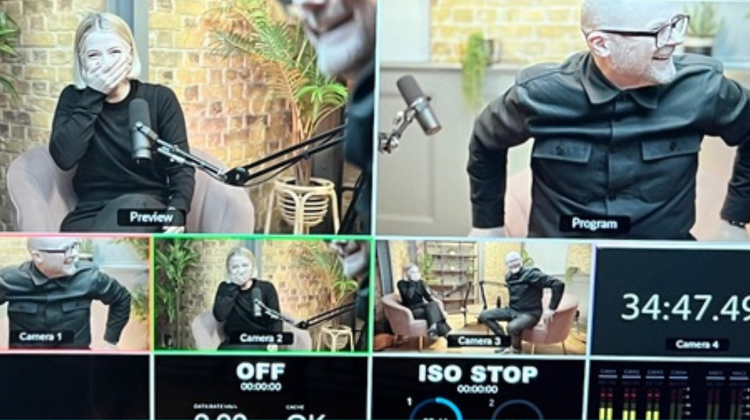
The Problem with B2B Communities… we’re sitting down with Emma Clarke, founder of community-building consultancy CUSP, exploring the challenges of building effective B2B communities in today’s podcast drop. Drawing on her experience working with brands like Soho House, Soho Works and 180 Studios, Emma explains why community building is essential for fostering authentic customer connections, but also outlines why many B2B brands struggle to implement it. She discusses the shift from top-down marketing to customer-led engagement, and offers strategies for overcoming internal resistance, maintaining engagement, and measuring success. Listen here. |